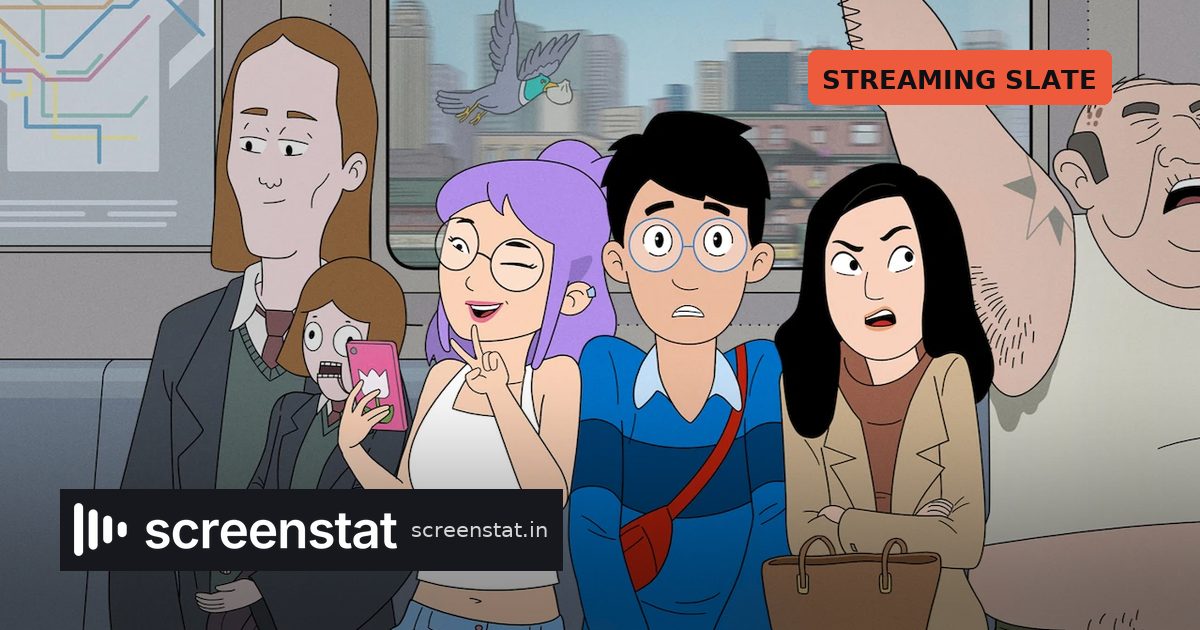
Netflix has another adult animated sitcom on the board. DANG!, created by and starring Andrew Law, follows three siblings navigating self-inflicted chaos in New York. The early critical read, from What’s on Netflix, is polite but unenthusiastic: strong premise, thoughtful episode ideas, jokes that don’t land often enough.
What the show actually is
The trio at the centre: Andrew (Law), Eunice (Poppy Liu) and older sister Ruthie (Stephanie Tsu). Andrew and Eunice have been sharing a life in the city; Ruthie, the family’s success story on paper, turns up and reveals she is just as much of a mess, pregnant by Peter (Sungwon Cho), a married chauvinist who the review flags as the show’s standout comic asset despite limited screen time.
Law co-showruns with Matt Murray and brings writing credits from The Good Place and Silicon Valley. That lineage shows: the series is heavily invested in digital livelihoods, from Eunice’s OnlyFans-adjacent channel to Andrew leaking gossip about staff at the company he founded. Animation is by Titmouse, working in clean digital lines, flat shading and restrained character acting that makes the occasional burst of slapstick surrealism hit harder.
The critique that matters commercially
The review’s central complaint is not craft, it’s shelf life. DANG! leans on cultural references and celebrity cameos, including Hayley Williams in a dream sequence and a bit featuring Chrissy Teigen and Rina Sawayama. The joke, as the reviewer puts it, is often just that a cameo is happening.
For a catalogue business, that’s a real issue. Streaming economics reward titles that keep earning views two and three years after launch. Topical joke density is the enemy of that. A reference-heavy comedy is priced like a news cycle; a character-driven one is priced like an annuity.
Netflix’s adult animation pattern
The review positions DANG! inside a visible trend: Netflix adult animation drifting toward the dysfunctional-family comedy, with Raphael Bob-Waksberg’s Long Story Short as the obvious reference point. That comparison is not flattering here. Long Story Short stretched across decades of a family unit; DANG! mostly needles Gen Z affectations, from phone-call anxiety to Klarna debt to therapy-speak deployed with ulterior motives.
Why the platform keeps commissioning in this lane is straightforward:
- Cost structure. Animation avoids location, cast availability and reshoot risk, and scales across seasons predictably.
- Dubbing leverage. Animated comedy travels into non-English markets more cleanly than live-action topical humour.
- Rewatch behaviour. Sitcom-format animation is the most reliably rewatched genre in streaming libraries.
- Talent pipeline. Writers from prestige comedy rooms are cheap to attach relative to their live-action equivalents.
The third point is exactly where DANG! is most exposed. Rewatch value depends on characters you want to spend time with. The review argues the show deliberately makes its leads hard to sympathise with, foregrounding their worst instincts, then fails to supply enough comic payoff to make that trade worthwhile.
What planners and marketers should take from it
Do not read a mixed review as a demand signal. Netflix’s animated comedies routinely outperform their critical reception because they function as background and repeat viewing rather than appointment watching. The number to watch is not week-one hours; it’s week-eight retention and whether the title reappears in Top 10 lists after the initial push.
Second, note the identity angle. The show works through LGBTQ+ culture clashing with religious dogma and anxieties around Asian fetishism in dating. That is a specific audience proposition, and it gives the title a marketing hook independent of its comedy scores.
Third, treat cameo-driven comedy as a short-window buy. If you’re planning around this title, front-load. The review’s verdict is that the gags repeat and the raunch doesn’t surprise. Titles like that tend to spike and settle fast.
Source: What’s on Netflix