The news
Hirokazu Koreeda’s Look Back premiered in competition at the Venice Film Festival on Monday. It is the Palme d’Or winner’s 18th feature and, notably, his second release of the year, following Sheep in a Box, the speculative drama about a bereaved couple and an AI android replica of their dead son that drew a chilly response from many critics at Cannes in May.
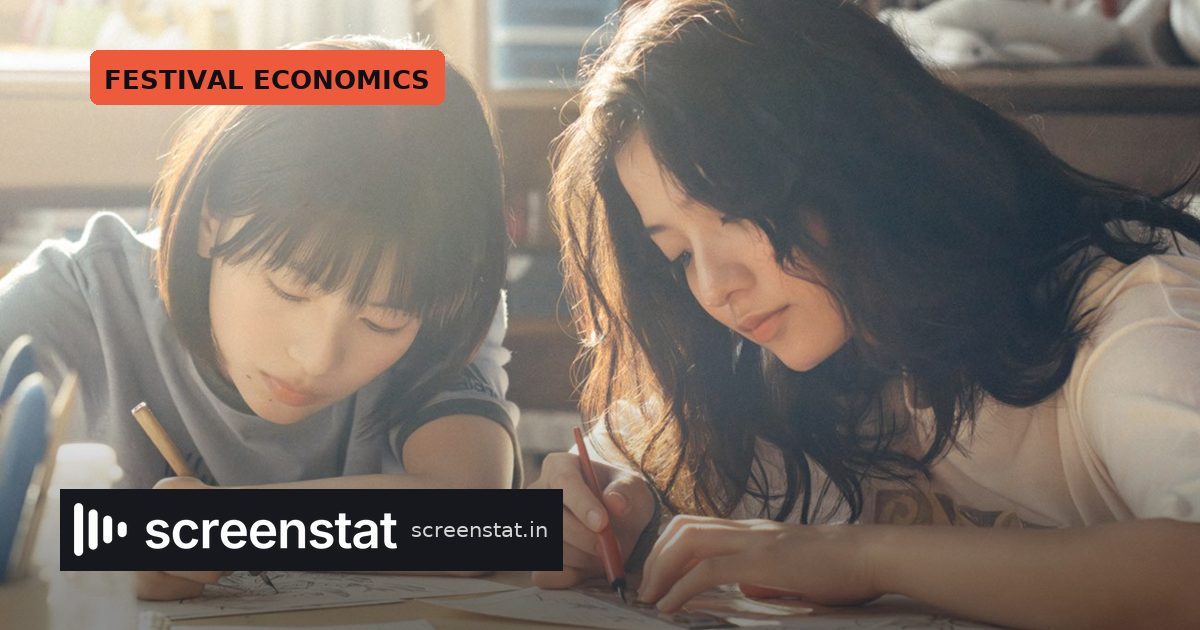
The new film adapts the acclaimed one-shot manga by Tatsuki Fujimoto, the artist behind Chainsaw Man. It follows Fujino, a small-town grade-schooler played by 12-year-old first-time actress Furi Nanase, whose comic strips make her a minor school celebrity until she encounters the sophisticated drawings of reclusive classmate Kyomoto (Rokka Okada). Rivalry becomes partnership – Fujino draws characters, Kyomoto handles backgrounds – across a 13-year arc, with Natsuki Deguchi and Aju Makita taking over as the adult leads midway through. It was shot on location in Japan’s northern Tohoku region across a full year of seasons.
Why the numbers people should care
Strip away the auteur framing and this is a manga IP play arriving through the festival door rather than the anime pipeline. That matters, because the two routes to market for Japanese comic properties have very different economics.
- Anime adaptation: built for volume, streaming windows and merchandising; travels globally on platform recommendation engines.
- Live-action arthouse adaptation: built for festival prestige, awards runs, specialty distribution and long-tail library value on premium streamers.
- Author brand carryover: Fujimoto’s Chainsaw Man recognition gives a quiet drama a marketable hook in territories where Koreeda alone would not open a film.
For acquisitions and programming teams, that combination – a globally recognised manga author, a director with a Palme d’Or, and a Venice competition slot – is exactly the profile that clears the bar for a specialty theatrical release plus a downstream streaming licence in multiple markets, including India, where Japanese titles increasingly land through festival circuits and curated OTT slates.
The output question
Koreeda’s release cadence is the second data point worth logging. He directed the full Netflix series Asura last year, then delivered two features in a single year with Cannes and Venice premieres. Asked whether he plans to slow down, he told The Hollywood Reporter he has none, and is already writing his next script.
Prestige directors moving between streaming series and theatrical features at that speed is now normal rather than exceptional. It also spreads risk: Sheep in a Box was a genre departure that landed poorly with critics, and Look Back – much closer to Koreeda’s established register of gentle humanism and childhood observation – resets the year within months. In a business where a single soft reception used to define a cycle, higher output shortens the recovery window.
What Koreeda says about the adaptation
He described buying the manga on impulse at a bookstore near Shinagawa Station and reading it in one sitting during the pandemic, a period when he was working little. He was clear that a straight visual transposition was not possible: manga rhythm comes from the changing shape and size of panels, and cinema, in his words, has a different grammar. What he did carry over was the recurring image of a girl seen from behind at her desk while the world outside her window changes.
On the emotional register, he was blunt: “I was tearful the entire time I made this film,” he said, describing the same reaction while writing, shooting and editing.
What to watch next
Three markers will tell you how this converts commercially: whether it takes a Venice prize, how quickly international rights close in the major territories, and whether distributors position it as a Koreeda film or a Fujimoto adaptation. The second framing has a far larger addressable audience – and that choice, more than the reviews, will decide the box office ceiling.
Source: The Hollywood Reporter