
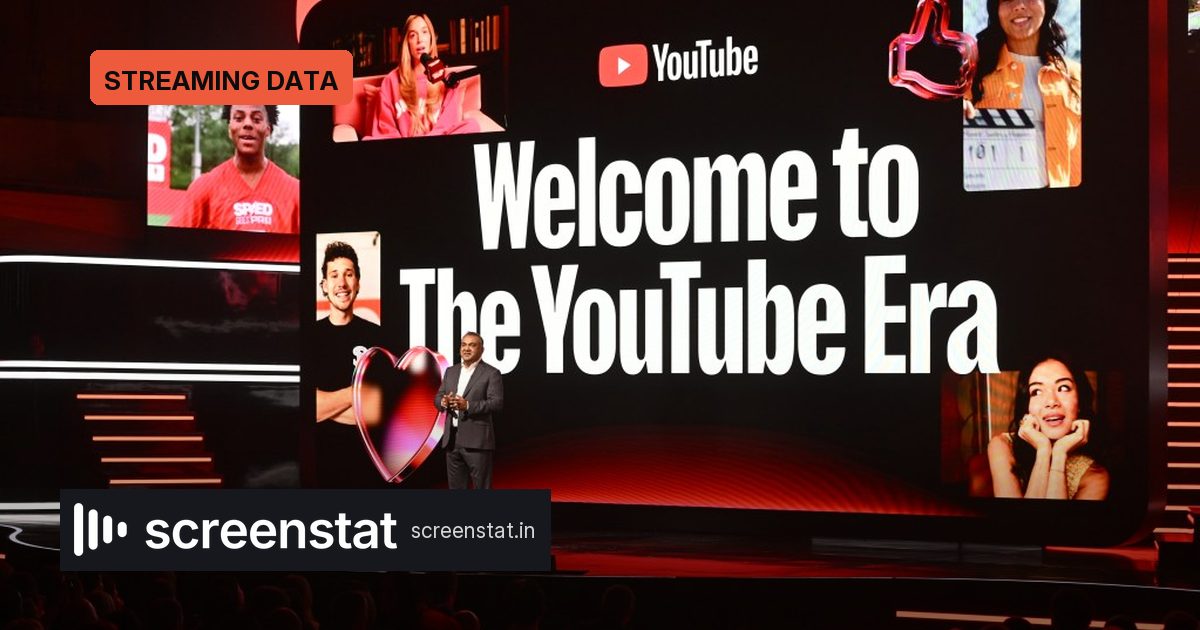
YouTube’s biggest screen is the television, and its latest product release treats the living room less like a passive viewing space and more like an interactive surface. At its Made on YouTube event on Wednesday, the company announced nearly three dozen new features for creators, viewers and brands, part of what CEO Neal Mohan said is now 3,000 product updates in 2026.
What changed on TV
The living-room app is gaining features that previously belonged to mobile and web:
- Viewers can post comments directly from the TV app.
- Channel posts—still images and text updates—are now available on television.
- YouTube Shorts on TV now supports series watching, not just one-off clips.
The company says the additions came from viewer and creator feedback, not from an assumption that every phone feature should move to the big screen. The test was whether the TV felt complete. “We didn’t want it to feel broken,” said Kurt Wilms, senior director of product management for YouTube on TV.
Why the TV screen is becoming interactive
The push is grounded in a simple data point: YouTube has topped Nielsen’s U.S. TV rankings for three straight years, and as of July it accounted for 14.2% of all U.S. TV viewing. Scale like that makes small changes in engagement meaningful.
Wilms framed the shift as a move between two states rather than a hard divide. “Consumption is moving away from being passive, and people want to be engaged,” he said. A viewer may lean back to watch a show, then lean in to read comments, post a reply or jump to a creator’s channel. YouTube’s research labels these as modes—music as a home stereo, family viewing, or quick bites of short-form when someone does not know what to watch.
For media planners, that changes the meaning of connected-TV reach. A television impression is not necessarily a captive but passive viewer; it can be someone actively navigating, commenting or watching a series of short clips.
Shorts and microdramas are the proof points
Short-form on the living-room screen was once seen as counterintuitive. YouTube reports that Shorts programming now draws more than 2 billion hours of viewing on TVs each month. Wilms said the television unlocked communal viewing for Shorts in a way phones could not.
Microdramas are another growth signal. The category has generated more than 6.5 billion views on YouTube already this year, and microdrama viewing on TV screens specifically is growing 90% year over year.
What to do with the numbers
For streaming and TV teams, the practical read is to stop planning TV as a single mode:
- Expect interactive features—comments, posts, series browsing—to become part of the living-room experience.
- Test short-form and microdrama inventory on connected TV alongside long-form buys.
- Segment by viewer mode and occasion, not just by device or age group.
YouTube’s argument is that features normalize quickly once viewers see them on the biggest screen. The trend line points toward a connected-TV experience that borrows more, not less, from interactive platforms.
Source: Deadline