Issa Rae’s Hoorae Media has a new proof point for vertical storytelling: its first TikTok microdrama, Screen Time, has accumulated nearly 580 million views across TikTok and its dedicated app, PineDrama. The number gets attention. The harder question is whether that attention translates into a production model that keeps indie filmmakers, cast, and crew working.
Not another pay-per-cliffhanger play
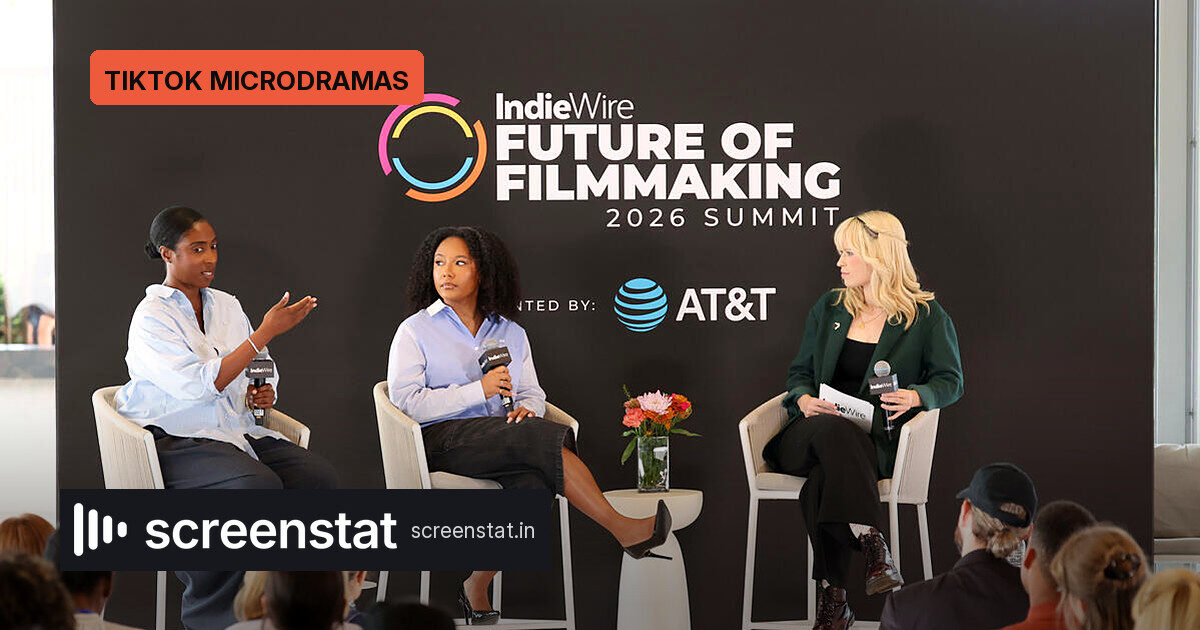
Executives Jax Clark and Dzifa Yador shared the figure at IndieWire’s Future of Filmmaking Summit on October 17. They framed Screen Time as a premium product built for the phone, not a downgraded film project. “My favorite comment is, ‘Who put Netflix on my TikTok?’” Yador said. “It just really validated the fact that we did not abandon what it takes to build a premium product.”
That matters because Hoorae is running a different commercial equation. Omdia forecasts $1.5 billion in U.S. microdrama revenue in 2026, and earlier global research found more than 60 percent of revenue coming from subscriptions or transactional payments. Hoorae’s microdramas are free with ad support on TikTok and PineDrama, funded through brand partnerships rather than fees for the next episode.
A volume model with brand support
Hoorae says the economics are a math exercise. “This is a volume game,” Yador said. “How much can you make in X amount of time with X budget?” The company’s in-house sales team works with advertisers early, aiming for brand integration that feels natural rather than “slapped on.” That approach lets Hoorae protect creative decisions while feeding the financial model.
After Screen Time, Hoorae has already released The Compatibility Experiment and Parental Advisory, with 10 more microdramas planned for next year. The slate keeps secrets and cliffhangers coming, but the point is scale: more productions, more on-set hours, and more entry points for talent.
- Distribution: free, ad-supported on TikTok and PineDrama, with TikTok joining as a partner around production wrap.
- Business model: brand-funded and volume-driven, not subscription or transactional.
- Labour: Screen Time is a SAG production under a Verticals Agreement covering minimum pay, overtime, and pension and health contributions.
Why it matters for the screen business
Hoorae’s experiment arrives as barriers to entry rise and production in Los Angeles remains constrained. The company positions microdramas as a pipeline: on-set and post experience for assistants, early-career writers, and actors new to vertical. But Clark was clear that a feature script cannot simply be chopped into minutes. Creators must build specifically for the format.
That means every episode must work as an entry point in a scrollable feed. “Wherever you get dropped in has to feel just as propulsive and just as noteworthy as your pilot episode,” Yador said. Hoorae spent two years studying vertical storytelling before launching, combining traditional filmmakers with people who had already made verticals.
For media planners and entertainment marketers, Screen Time is a useful test case: a creator-led studio using platform distribution and integrated sponsorship to finance union-covered production. The 580 million views get attention; whether the model can sustain a slate is the next number to watch.
Source: IndieWire