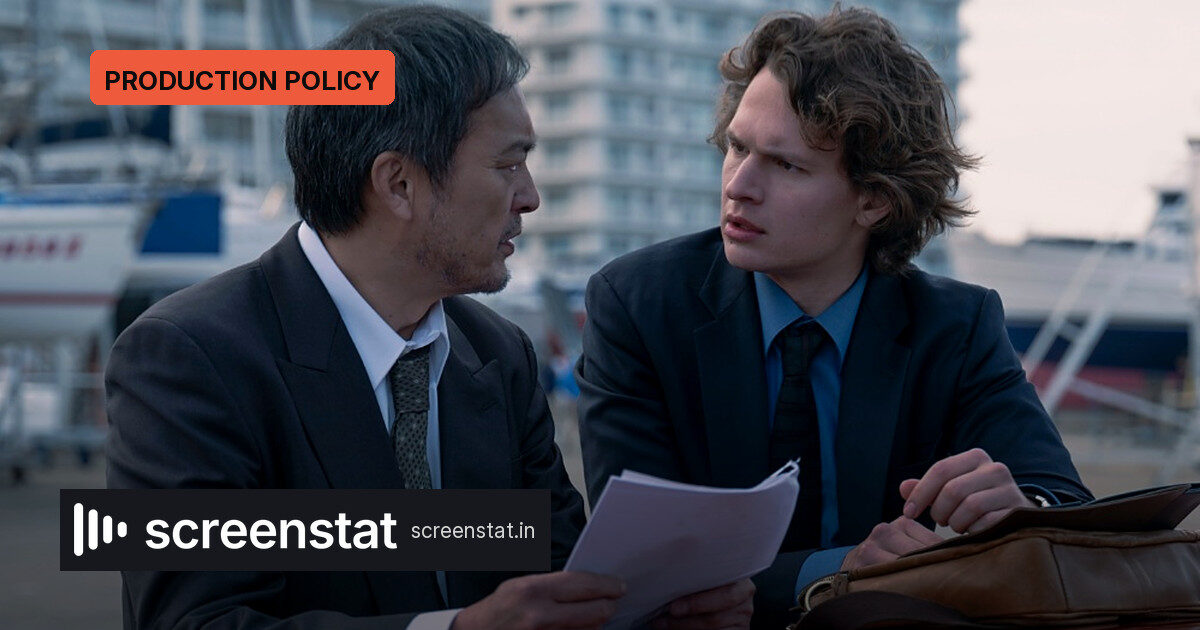
Japan’s flagship international production incentive, IP360, offers a 50% rebate on Japanese spend—but producers at the Motion Picture Association’s annual seminar during the Tokyo International Film Festival say the programme’s real problem is not the size of the rebate, it is the uncertainty built into its rules.
Minimum spend floors block independent films
“Tokyo Vice” producer Alex Boden told the audience that the current IP360 minimum spend of JPY800 million ($5.1 million) is higher than most Japanese film budgets of $1.5 million to $3 million, effectively excluding independent films and co-productions. He also called for an automatic approval system to replace panel-based selection, arguing that Japan is one of the few territories with a subjective incentive at a time when projects can take three to five years to come together.
“How does a producer know that they can count on the Japan incentive in advance? That’s the question, and we need a solution,” Boden said.
Certainty matters more than the rebate rate
Netflix production policy director Deb Richards said a lower incentive would be acceptable if producers could trust it. “You can have a lower incentive, that’s fine, as long as it’s certain, as long as the criteria are clear,” she said. For Japan, she said, the criteria are not clear, and applicants can only work out why they were rejected by studying who was approved.
Boden pointed to Japan-set projects such as Martin Scorsese’s “Silence,” “Pachinko” and “Shōgun” that scouted the country but shot elsewhere. He urged Japan to build crew training into the incentive, citing the U.K.’s 0.5% ScreenSkills levy as a model.
Paul Muller, the MPA’s VP of production policy for Asia-Pacific, offered Australia as a comparison: international productions must spend at least AUD20 million and allocate 1% of the budget to training. Since that rule began in June 2023, more than AUD20 million has gone into skills development, he said.
Government signals from inside the room
Georgina Pope, head of production at Toho Tombo Pictures, said Tokyo permitting is slowly changing—her team recently closed the road in front of Tokyo City Hall for a large car scene. Boden called Japan “the hottest country in the world” for production right now, but warned that a slow fix would be “a real missed opportunity.”
On the government side, Nakahara Hirohiko, director-general of the Cabinet Office’s Intellectual Property Strategy Promotion Secretariat, said a task force for a new unified content body held its first meeting on Oct. 22. The body, ordered directly by the Prime Minister, aims to break down silos across four ministries and launch in 2027. The wider roadmap targets JPY20 trillion ($127 billion) in overseas content sales by 2033.
Former LDP secretary-general Amari Akira said the earlier attempt to grow Japan’s content industry was done “through addition,” while the new plan works “through multiplication.” TIFF director Hisamatsu Takeo noted Japan was country of honor at this year’s Cannes Film Market and that 37 Japanese films screened at Busan.
What to watch for screen businesses
- Automatic, criteria-driven approval would change whether global producers can lock Japan into a multi-year financing plan.
- A training levy could produce the crew base that international location shoots need.
- The planned 2027 unified body and two-year funding are the next concrete policy signals to track.
Muller said that if the government delivers the changes discussed, the JPY20 trillion IP360 goal is “well within scope and well achievable.” For producers deciding where to put a shoot, the next twelve months of rule-writing will matter more than any new rebate headline.
Source: Variety