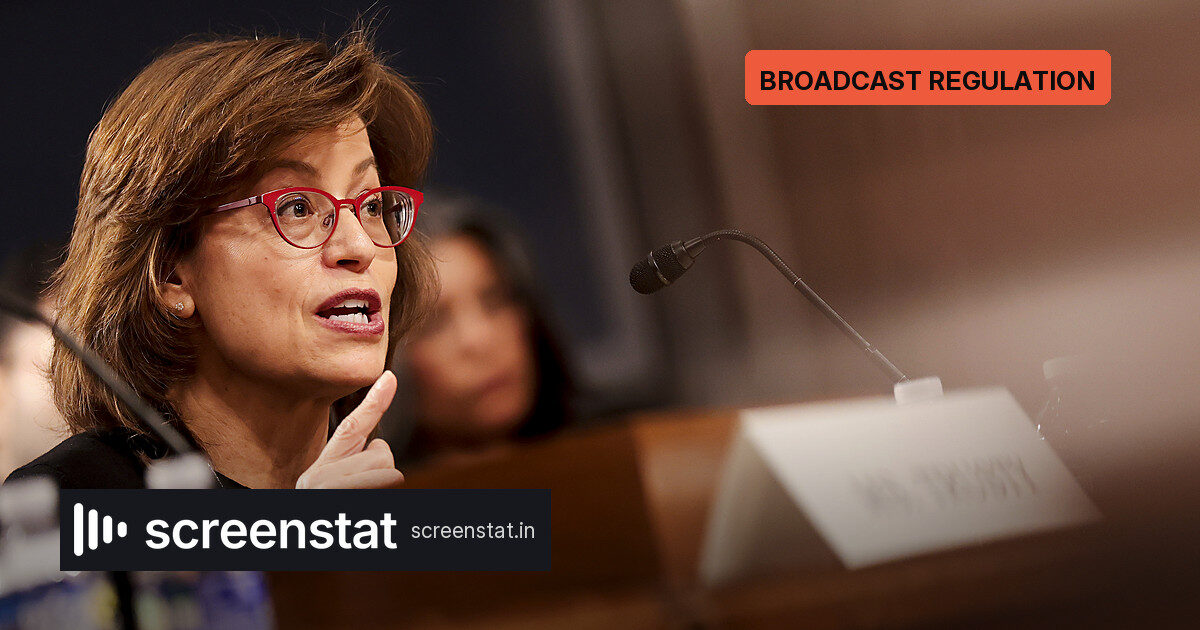
The Federal Communications Commission’s lone Democrat is telling the broadcast industry to stop treating Chairman Brendan Carr’s election-coverage warnings as a narrow spat and start reading the actual legal standards.
Anna Gomez wrote to National Association of Broadcasters president and CEO Curtis LeGeyt that stations covering the midterms ‘need to understand what the law actually requires’ before the chairman’s threat has its ‘intended chilling effect.’
The legal threshold isn’t a vibe
Carr’s warning, posted on social media, said journalists and broadcasters have aired polls ‘without regard to basic journalistic ethics’ and without disclosing that those polls ‘lack a scientific, accurate, or even real basis.’ He cited the FCC’s news distortion and broadcast hoax policies.
Gomez’s response is a plain reading of precedent: a news distortion violation requires documented evidence of an intentional effort to mislead the public; the hoax rule applies when a broadcaster knowingly airs false information about a crime or catastrophe.
Absent that level of clear evidence, this commission has no authority to act. Reporting the results of a poll this administration happens to dislike does not come close to meeting those standards.
That distinction is the whole game. Carr pointed to Wedgewood Polls, which admitted fabricating results, but the broader target has long been polls that merely look unfavorable. The legal gap between fabrication and unfavorable is what Gomez wants the NAB to defend.
Why the NAB’s silence matters
The NAB began this administration looking for deregulation — including repeal of the 39% national TV household reach cap, which the FCC moved on last summer. That makes the lobbying calculation harder: the industry wants fewer ownership rules, not a louder fight over content rules.
But the FCC has also issued Equal Time Rule guidance that puts news interview exemptions in doubt, opened an investigation of The View after it featured James Talarico, and expanded discounted political ad eligibility to joint fundraising committees and coordinated party campaigns.
- News distortion: punishment needs documented intent to mislead — not a bad poll.
- Broadcast hoax: applies only to knowingly false crime or catastrophe information.
- Equal Time Rule: new guidance makes talk-show bookings riskier if rivals request time.
Gomez wrote that the NAB’s response ‘has not yet matched the scale’ of what members face, even as she acknowledged the group has not stayed completely silent. An NAB spokesperson said it would keep working with all policymakers to protect broadcasters’ rights.
What to watch
For broadcast executives and media planners, the practical message is to treat polling standards as a compliance checklist, not a political argument. Document source methodology, distinguish editorial decisions from ad-sales judgments, and don’t mistake a regulator’s social post for an enforceable ruling.
The larger signal: licensing authority is becoming leverage over election-year coverage, and the industry’s trade voice is being asked to match the threat in volume.
Source: Deadline