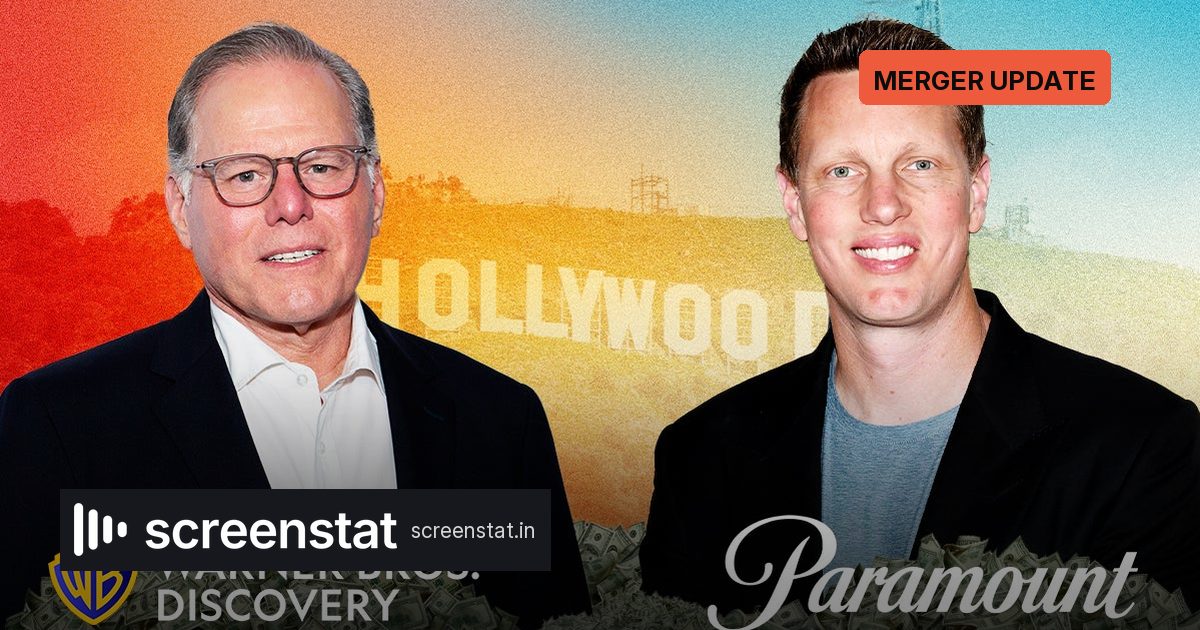
Paramount Skydance and Warner Bros. Discovery shares each jumped about 10% in Monday trading after the companies and 12 state attorneys general settled the antitrust challenge to their pending $110 billion merger. The settlement, expected to be formally announced later Monday, removes the state AGs from a March trial and sharply lowers legal risk around one of the most closely watched media consolidations in years.
The settlement economics
Final terms were not immediately disclosed. Weekend discussions covered a possible temporary separation of the two film studios, protections for CNN and CBS News editorial independence, and financial penalties tied to Paramount’s commitment to release 30 theatrical films annually. The reported framework would let Paramount avoid forced divestitures of cable networks—structural remedies California Attorney General Rob Bonta had pushed for.
Paramount had already pledged the 30-film annual target. Converting that pledge into a remedy with financial consequences turns a distribution and marketing promise into a compliance metric that exhibitors and filmmakers will watch closely.
Why the timing mattered
Paramount had extra incentive to resolve the state AG fight before Oct. 1. Beginning that date, it would start accruing a 25 cent per share ticking fee—about $650 million per quarter, or roughly $7 million a day—until the deal closed. Paramount also had agreed to delay closing until five days after a trial outcome or June 1, 2027, whichever came first.
David Ellison had signaled that without a settlement by the deadline he would begin moving Paramount’s operations out of California. The Los Angeles Economic Development Corporation estimated such a move could eliminate up to $21.2 billion in annual economic output, 57,980 full-time jobs and $1.17 billion in state and local tax revenue.
A separate analysis prepared for the LA County Board of Supervisors put the merger’s job risk at 4,500 local TV and film positions, plus more than 5,800 indirect or induced jobs over three years. The estimated losses include $4.06 billion in total business output and $547 million in tax revenue.
What media buyers and distribution teams should watch
- The 30-film target: If financial penalties are attached, the theatrical commitment becomes a supply signal for exhibitors, marketers and talent.
- Newsroom guardrails: Any protections for CNN and CBS News will shape advertiser confidence in news brands, not just corporate structure.
- Labor and legal opposition: The settlement with state AGs does not automatically end criticism from the WGA, SAG-AFTRA, the Teamsters or the talent letter opposing the deal.
- Scale versus structure: Paramount argues the combination gives it a better chance against tech giants; the state AGs argued it could dominate film and cable. Final settlement terms will show which view shaped the remedies.
The merger already has clearance from Warner Bros. Discovery shareholders and from regulators in 68 jurisdictions, including the U.S. Department of Justice, the Federal Communications Commission, the European Commission and the UK’s Competition and Markets Authority. Public support has come from California Gov. Gavin Newsom, Los Angeles Mayor Karen Bass, the Directors Guild of America, IATSE and major exhibitors. The stock reaction suggests investors are treating the state AG settlement as the last major regulatory roadblock—even if some labor and creative critics remain.
Source: TheWrap