The settlement that unlocks the merger
Paramount’s agreement with 12 state attorneys general clears a significant path for its takeover of Warner Bros. Discovery, what would be the biggest merger in Hollywood history. The terms run through the end of the fifth calendar year after closing. If the deal closes before the end of 2026, the commitments stay in force until Dec. 31, 2031.
This is not a simple regulatory green light. The combined company will face divestiture risk if it misses specific film, employment and cable-distribution obligations.
Film output: quotas, tentpoles and an indie fund
The merged studio must release at least 30 theatrical films per year. In years one and two, at least 20 of those 30 films must be wide releases; in years three through five, the floor rises to 21 of 32 titles. At least four titles must be independent films, and at least 50% of the slate must be produced or co-produced with another company.
Paramount also agreed to spend an additional $300 million annually on U.S. film production — a $1.5 billion commitment over five years above 2025 levels. The settlement includes commitments on pricing to theaters and creates a $5 million-per-year indie acquisition fund, or $25 million over the term. If these film obligations are missed after a six-month grace period, Paramount-WBD would have to divest its entire ownership interest in Miramax Studios.
Lots, jobs and legal fees
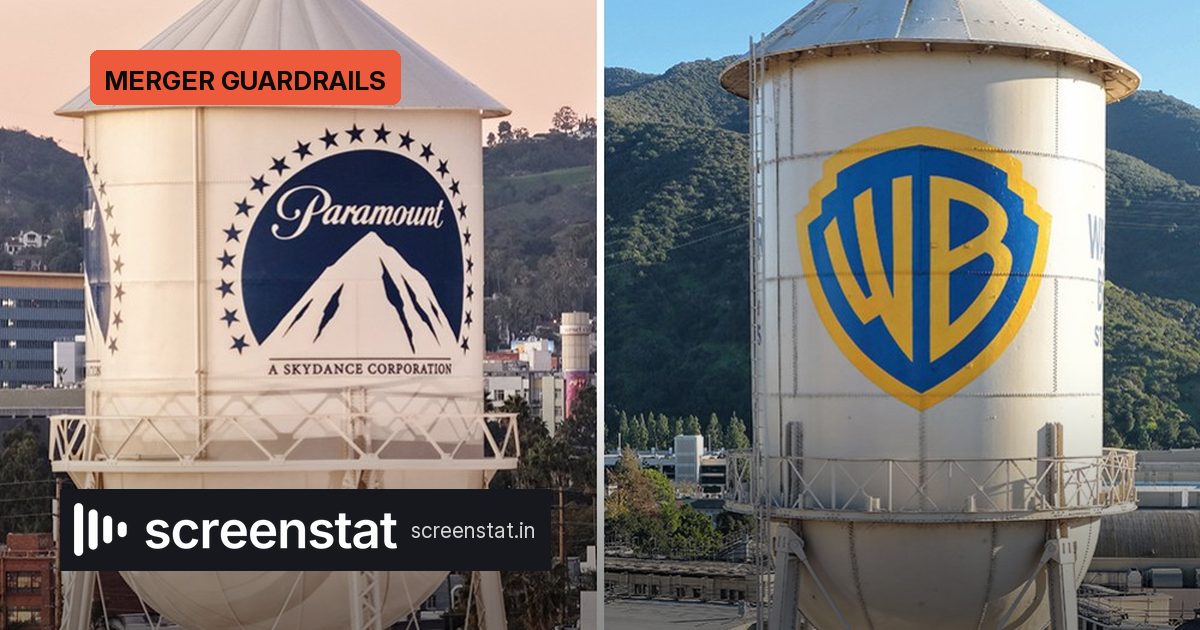
The company must maintain both the Paramount lot on Melrose Avenue in Los Angeles and the Warner Bros. lot in Burbank through at least the end of 2031. This removes the immediate threat that the combined entity could pull production out of California if the deal did not close by Oct. 1.
On employment, Paramount-WBD must honor existing collective bargaining agreements and contribute $47.5 million over five years to a workforce fund for training and career development for workers laid off because of the merger. Separately, the Writers Guild of America settled its own antitrust suit, winning a five-year prohibition on writer layoffs at CBS News Broadcast. The company will also reimburse the 12 states up to $40 million for legal and expert fees.
Cable carriage and editorial independence
For five years, the combined company must negotiate basic cable carriage separately for Paramount and Warner Bros. channels. The terms restrict changes to affiliate fee negotiations and bar the use of one company’s confidential information in the other’s negotiations. If those rules are broken, Paramount-WBD could be forced to divest channels including BET’s suite, VH1, Comedy Central, Smithsonian, Destination America and Science.
CNN and CBS News would be overseen by a News Editorial Independence Board. An internal compliance monitor and an independent monitoring trustee would track the wider settlement, while a State Committee of five states would also oversee enforcement.
What media professionals should watch
- 30-plus theatrical releases annually, with specific wide-release and tentpole minimums.
- $1.5 billion in added U.S. film production spending over five years.
- Five-year protections for California studio lots and CBS News writer jobs.
- Divestiture triggers covering Miramax and 11 cable channels if terms are missed.
Court approval is the next gating item. If the proposed settlement is accepted, the operational guardrails for Hollywood’s biggest merger will be unusually specific.
Source: Variety