The 85% that changes the pitch
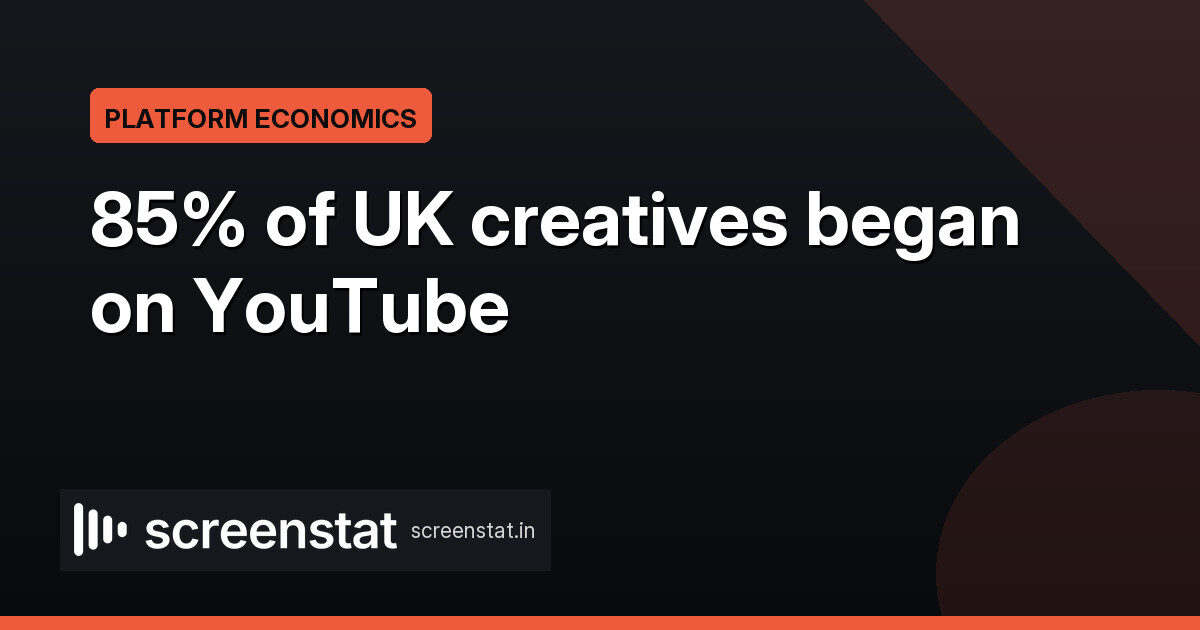
At the Iberseries & Platino Industria conference, YouTube’s VP for Europe, the Middle East and Africa, Pedro Pina, offered a simple framing: YouTube is an incubator, not just a distributor. The platform’s UK data, he said, shows 85% of people with a creative career in the industry started on YouTube. Pina called it a “greenhouse of the future of creativity.”
That one figure reframes debates about fair use and takedowns. For an industry audience, it positions YouTube as the top of the talent funnel, feeding creators into film, TV and music.
“The number we have for the U.K. only so far is that about 85% of the people that have a creative career in the industry have started their career on YouTube.”
He illustrated the arc with platform moments: an early viral clip of baby Charlie biting his brother’s finger, Susan Boyle’s “Britain’s Got Talent” audition being re-uploaded despite takedown requests, “Gangnam Style’s” cross-border breakout, the rise of Justin Bieber and Ed Sheeran, and now genre films “Backrooms” and “Obsession” moving from YouTube to box-office success.
Broadcasters are no longer fighting it
Pina said the Boyle moment taught broadcasters that fandom on YouTube could drive viewers back to a linear show. The panel then showed how three European players are operationalising that.
- 3Cat: Catalonia’s public streamer calls YouTube “our destination” and “our gateway to our own platform.” It is the third most chosen platform among Catalans after Netflix and Prime Video, and children’s content is a bright spot.
- Minerva Pictures: The Italian company has built 180 channels, spanning 25 languages and roughly 7,000 films. It has produced 15 independent YouTube originals and wants to release 150 a year, blending real studios and AI.
- RTP: Portugal’s public broadcaster recently put live Champions League and Nations League football on YouTube. Early numbers are strong and, so far, it isn’t hurting linear broadcast viewing.
Why this matters for media planners
For marketers and platform executives, the takeaway is not “go make YouTube channels.” It is that YouTube is becoming a full-funnel media environment: top-of-funnel discovery, niche catalog monetization, and even live sports reach for younger viewers.
Pina admitted YouTube has under-explained its monetization and content protection tools, which left parts of the industry wary. That gap is also an opportunity: the producers and broadcasters who understand the model early can lock in distribution and audience habits before their competitors do.
Minerva’s Gianluca Curti captured the longer-term pressure: AI-assisted production and traditional filmmaking “have to learn to live together.” Media businesses treating YouTube as a piracy problem will be late to the part of the supply chain where the next generation of commercial IP is being tested.
Source: Variety