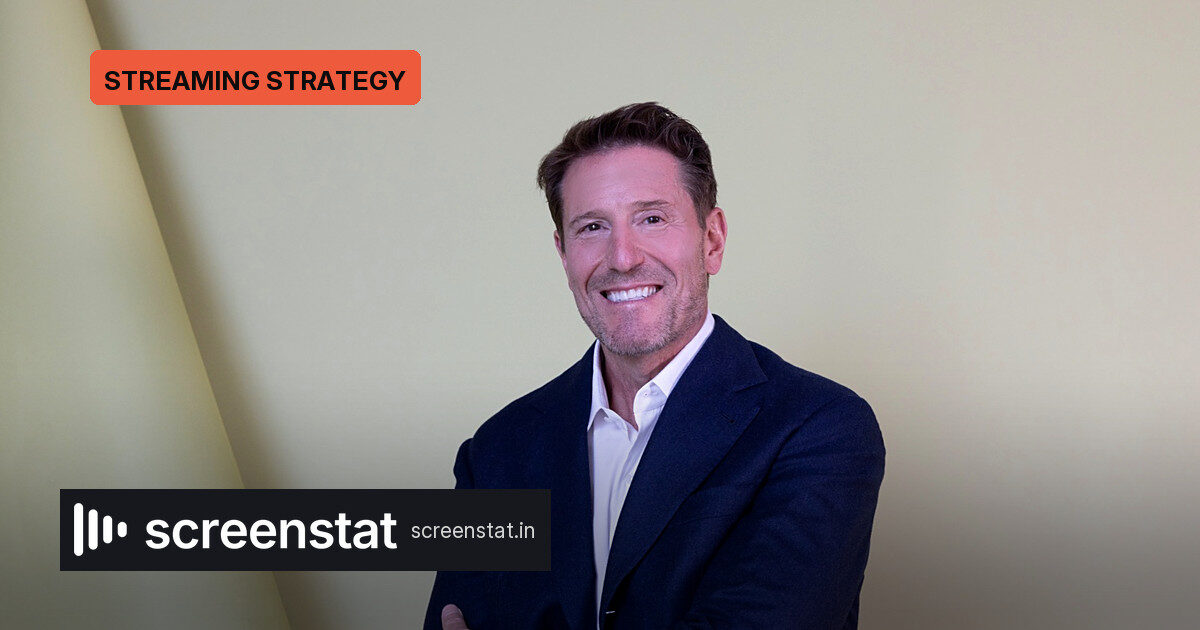
Kevin Mayer, co-founder of Candle Media, says the company’s founding bet on endlessly rising streamer demand broke in 2023. Speaking at the Qatar Film Committee’s Industry Days event in Doha via video link from Los Angeles on Friday, Mayer said demand for streaming content fell to about 35% below its 2022 peak, a contraction Candle Media did not see coming.
The thesis that missed the turn
Candle Media launched in 2021 with a simple idea: as studios pulled IP in-house for their own streaming services, independent producers would become more valuable because they could sell to any buyer. The second assumption was that demand for high-quality content would keep growing in double digits each year.
“Starting in 2023, that didn’t happen,” Mayer said. “In fact, the demand for streaming content actually contracted quite a bit, to about 35% below the peak of 2022.” He added: “That part of our thesis was incorrect, unfortunately. We didn’t see that contraction coming.”
The sale that framed the admission
The comments came six weeks after Candle Media sold Reese Witherspoon’s Hello Sunshine to Paris-based Mediawan. Candle acquired Hello Sunshine in 2021 for $900 million; the resale price was not disclosed, though trade reports said it was likely several hundred million dollars below the original figure.
Mayer did not spend much time on the sale. “On the live action side, we gave it a really good shot with Hello Sunshine and other assets,” he said. “It was okay, but they didn’t work out to what we wanted, so we recently sold those.”
Where the model did work
The exception was Moonbug Entertainment, the children’s media company behind CoComelon, Blippi and Little Angel. Candle took CoComelon episodes born on YouTube, packaged them as hour-long compilations and licensed them to Netflix from 2021 through 2024.
Mayer said CoComelon was simultaneously the largest YouTube channel in the world and the most popular Netflix show in the world for three solid years. That proved one side of the format thesis: social-first stories can travel into traditional streaming.
The reverse did not hold. Attempts to push traditional film and TV IP into social formats did not perform well, Mayer said. Titles such as Obsession and Backrooms showed more traction moving from social storytelling into longer formats.
What this means for media teams
- Streamer demand has a ceiling. The 35% fall from the 2022 peak argues for conservative volume assumptions in content planning.
- Format-native IP travels better in one direction. YouTube-born brands moved into streaming; traditional film-to-social did not.
- Independence is no hedge by itself. Mayer still sees value in selling to any streamer, but premium multiples need more than flexibility.
For buyers and planners, the number to hold onto is 35% below the 2022 peak. It is a rare, named executive quantification of the correction that followed the streaming boom. The strategic response may be less about owning more IP and more about knowing which format the IP was built for before writing the cheque.