Spain used its Country of Honor slot at the International Film Festival of India to make a sharper pitch at WAVES Film Bazaar in Goa: an India-Spain co-production is less a location decision and more a market-access decision.
The pitch
Camilo Vázquez, deputy director of the Institute of Cinematography and Audiovisual Arts (ICAA), called co-production “a key instrument.” That means better financing, exchanges between technical and artistic teams, and stories that can connect with audiences in both countries. He described the timing as especially favourable.
Usha Jadhav, a National Award-winning actor and producer with ACortes Films, made the on-ground case. Spain has a track record with international productions, varied landscapes and architecture, and crews used to big-budget and independent work. She also cited eight-hour shifts and quieter shooting environments as practical advantages, especially for sync-sound productions.
“Language is not a barrier, because cinema itself is a universal language. We need human stories.” — Usha Jadhav
What each side brings
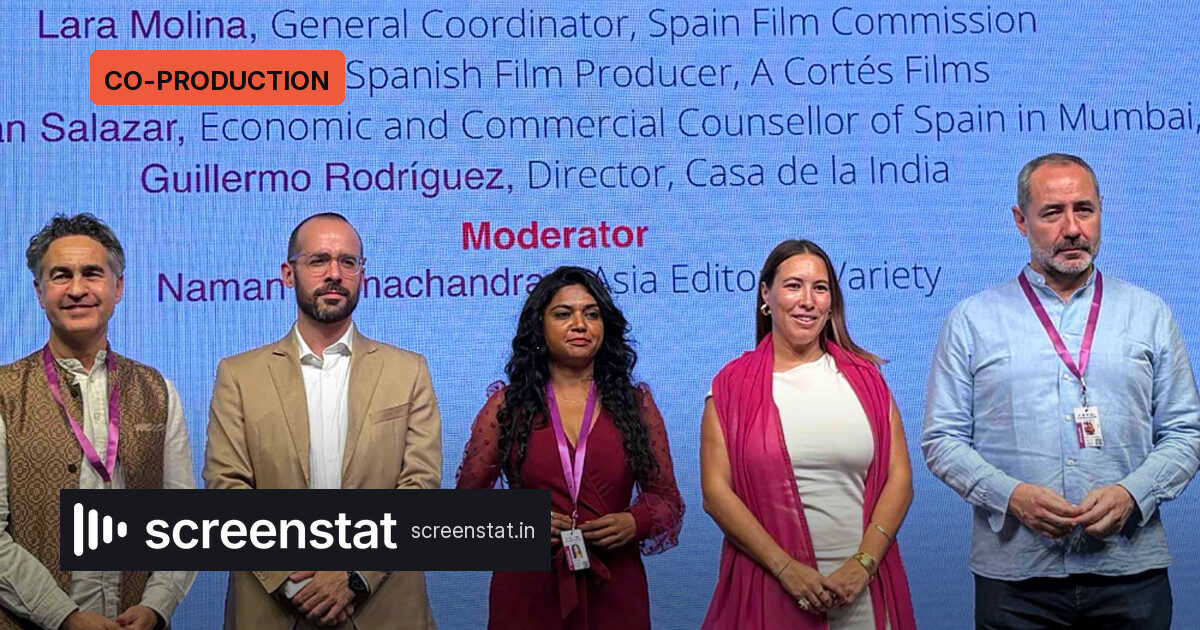
Spain Film Commission general coordinator Lara Molina outlined the tax incentives available to international productions. Miguel Fabián Salazar, Spain’s economic and commercial counselor in Mumbai for ICEX, mapped the exchange: India brings production scale, a large consumer market, a global diaspora, and VFX and animation strength. Spain brings experienced crews, creative talent and access to Europe and Latin America.
- Co-production and financing
- Distribution and post-production
- Production services
Salazar said the pieces “all feed into each other,” noting that Spanish films are travelling farther internationally while Indian productions and streaming services grow fast. ICEX’s Mumbai office works with producers and distributors on market access, local partnerships, business setup and regulatory requirements, and has run business missions around animation, post-production and gaming.
The actual route
India and Spain signed their audiovisual co-production agreement in 2012. Casa de la India director Guillermo Rodríguez said the scheme is being updated and clearer guidelines are coming. Under it, an Indian producer approaches NFDC, and the Spanish co-producer goes to ICAA.
“The real roadmap is about building connections and building trust,” Rodríguez said. His larger point: Spain is not just Spain. It is a doorway to a Spanish-speaking market of more than 500 million people.
Five Spanish projects seeking Indian partners were tabled: My Parents Grand Bazaar, India-Mexico-Spain romance Serendipia, The Dragon Letter, animated Mumu, and documentary Aana and Aai – The War to Become an Artist.
What this means for producers
The negotiating move is not to compare rebate percentages first. It is to decide whether the co-production leads to a creative partnership or a service contract. For Indian producers with distribution ambitions beyond English-speaking territories, Spain is positioning itself as the low-friction gateway to a 500-million-viewer language market. The process is clear: follow the treaty, build trust, then talk scale.