Netflix says its French experiment with broadcaster TF1 is working well enough to copy. In its third-quarter shareholder letter, the streamer said it will pursue more licensing and third-party distribution deals along the same lines.
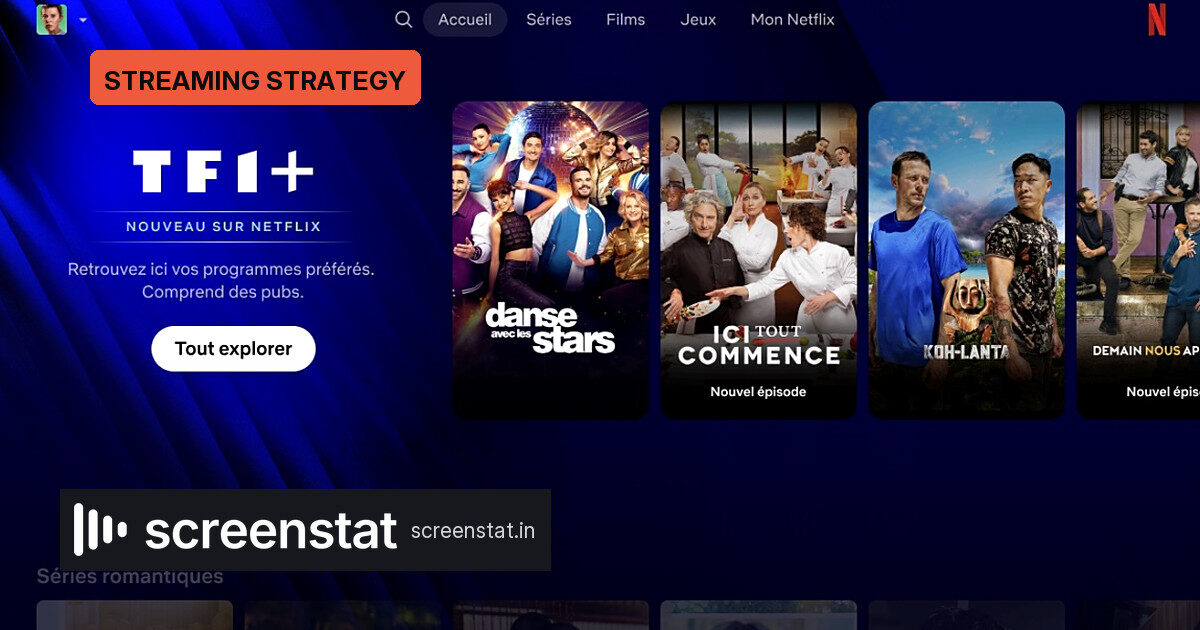
Over the summer, Netflix added TF1’s channels and on-demand programming in France. Subscribers gained local scripted dramas such as Broceliande and Erica, France’s version of The Voice, and other film, news and sports. The early read, Netflix said, is that the partnership is producing “incremental viewing in France” rather than simply reshuffling time already spent on the service.
“We’ll continue to expand our entertainment offering through licensing and new ways to bring more third-party content to our service, like our TF1 partnership in France.”
Netflix offered that line as part of a wider pitch: its audience is “approaching one billion people,” and its product capabilities make it a natural partner for studios, networks and creative talent.
Broadcasters as a growth lever
The strategic signal matters. Netflix has spent years building a global direct-to-consumer service with originals and licensed titles. Adding a broadcaster’s linear channels and local programming edges it closer to an aggregator model, where one subscription carries third-party networks alongside Netflix’s own slate.
For rights holders, the implied offer is distribution without abandoning linear economics. For subscribers, the value is more local relevance plus sports and news, all inside the same interface.
There is speculation that similar arrangements could eventually include content from NBCUniversal’s Peacock or Fox One, which would bring more NFL and entertainment programming onto Netflix. No deal is confirmed; Netflix is pointing to TF1 as the template.
Why it matters for planners
- TF1 benchmark: early metrics show incremental viewing, not just title substitution.
- Scale pitch: an audience nearing one billion gives Netflix leverage in licensing talks.
- Sports inventory: third-party deals could expand live sports supply without Netflix buying rights alone.
Netflix also showcased local hits to reinforce its international story: Plastic Beauty is on track to be its most-viewed series in Japan, The Secret Woman is trending toward its most-viewed Danish title, El Chapo is set to be its second most-viewed Mexican title globally, and The Perfect Lie is on track for the Netherlands.
View hours remain the metric to watch
Netflix addressed concern about view-hours growth directly. Engagement “remains healthy,” the company said, but it wants to accelerate the measure as well. That matters because view hours per subscriber are read as a signal for pricing power and retention, not just popularity.
The TF1 play is a direct response: more third-party content is meant to add watch time that would not otherwise have happened on the platform.
Source: Deadline