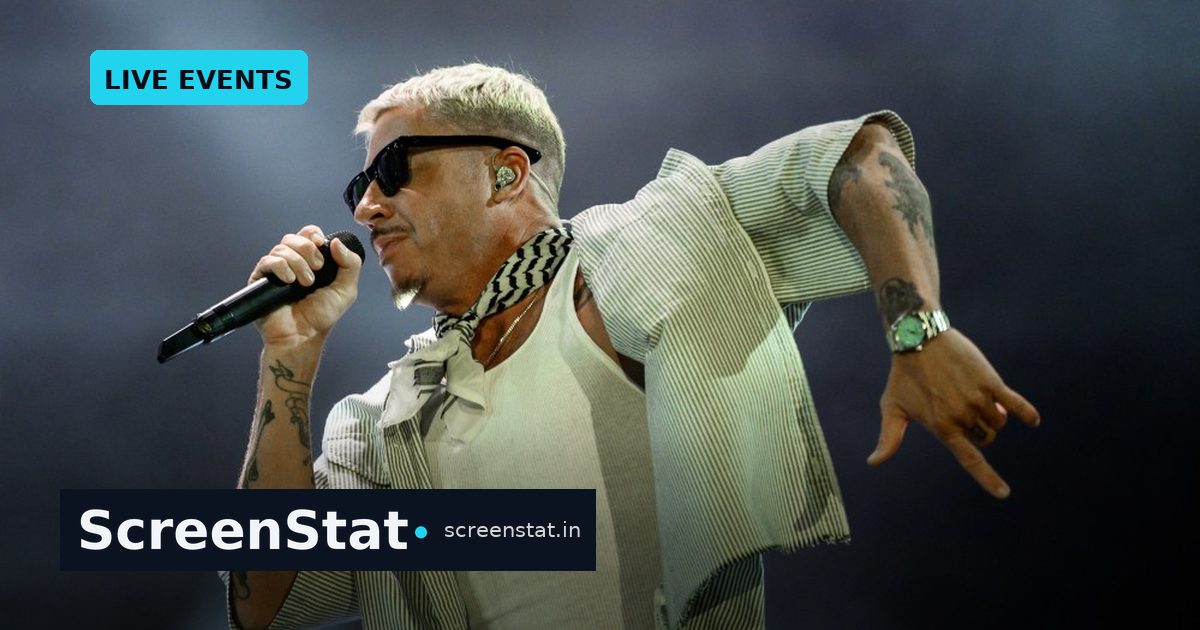
Macklemore opened for Ed Sheeran at MetLife Stadium in New Jersey on Friday night and used his set to call out “Free Palestine,” following it with a short speech saying he wanted people in Gaza and the occupied West Bank to know they had not been forgotten. He repeated the remarks the following night. He also referenced U.S. Immigration and Customs Enforcement during the same stretch, according to Variety.
The response arrived fast. The Israeli American Council launched a petition calling for the rapper to be pulled from the remaining dates of the Loop tour. The petition’s framing is worth noting for anyone who works in live entertainment: it does not argue that Macklemore lacks the right to hold political views, but asks where the line sits when an opening act uses what it describes as a global concert platform to push a one-sided agenda. Variety reports the petition does not display a signature count.
Why a support-slot moment becomes a business story
Stadium tours are no longer just ticketing businesses. They are content pipelines feeding short-form video, livestream clips, sponsor activations and, increasingly, streaming concert films. A 90-second moment from an opening act now travels further than the 60,000-odd people in the building. That is the structural shift that turns an onstage statement into a supply-chain question for promoters, brands and platforms.
The distribution math is simple. In the pre-social era, an unexpected political remark at a stadium show reached the room and maybe a local review. Today it reaches the room, then TikTok and Instagram Reels, then aggregation accounts, then trade press, then a petition with a media hook. Each hop multiplies the audience and strips the context.
Macklemore is not an accidental participant here. He released “Hind’s Hall” in 2024, a track critical of Israel’s actions in Gaza, and directed proceeds toward humanitarian work through UNRWA. Buyers and bookers had a documented signal about what his set might include.
The split-audience problem
Variety notes the reaction on social media went both ways. Some attendees said they walked out, arguing they had not signed up for a political rally and accusing the rapper of antisemitism. Others defended the remarks, with one line quoted as saying music has “always been a vital platform for human rights advocacy.”
For marketers, that split is the actual data point. There is no neutral outcome available once a moment like this is in circulation. Silence reads as endorsement to one side and cowardice to the other. The only variable a brand or platform controls is how prepared it was before the clip went up.
What live and streaming teams should take from this
- Diligence the support act, not just the headliner. Artists with a public political catalogue will bring that catalogue on stage. Prior releases are a reliable predictor.
- Write the clip scenario into the sponsorship contract. Define what triggers a brand’s right to pull logo placement or pause an activation, and who decides.
- Separate ticketing risk from content risk. Refund exposure from walkouts is small and measurable. Reputational exposure from a viral clip is neither.
- Decide the escalation path before the tour, not during it. Petitions are designed to force a public response on someone else’s timeline.
- Treat concert-film rights as a separate approval. What is acceptable live may not clear a streaming platform’s standards or an advertiser’s adjacency rules.
The bigger pattern
Advertiser-supported streaming has spent three years building brand-safety machinery for on-demand libraries. Live and near-live content is the weak point in that system, because the content does not exist until the moment it airs. As platforms push harder into live music, sport and events to win ad dollars, the Macklemore episode is a useful reminder that the risk model built for catalogue titles does not transfer cleanly.
No decision on the remaining Loop tour dates has been reported. Whatever happens, the template is now well established: statement, clip, petition, coverage, pressure. Teams that have not rehearsed that sequence will learn it the expensive way.
Source: Variety