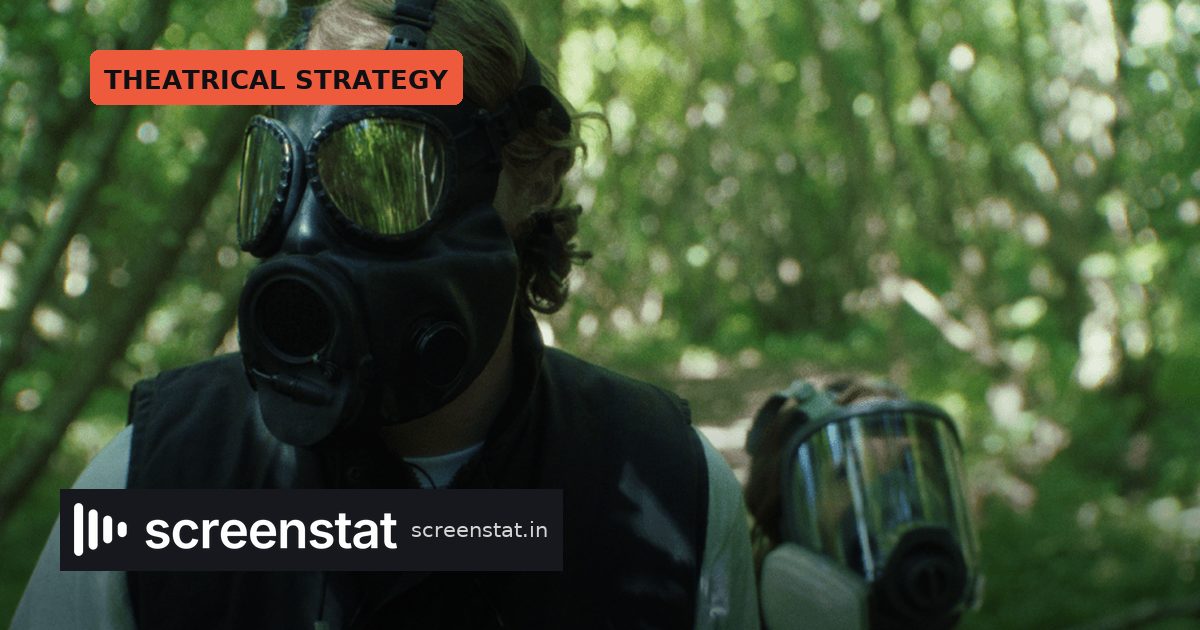
An indie feature shot in 15 days is getting a nationwide theatrical run without a studio, a sales agent bidding war or a streaming buyer. Scott Tinkham and Michael Woloson’s comic dystopian film Littermates will open Nov. 6 across more than 30 Alamo Drafthouse locations through Alamo Exclusives, the exhibitor’s own distribution label. It first plays as a special presentation at Fantastic Fest on Sept. 20, followed by a filmmaker and cast conversation.
It is only the second title released under the Alamo Exclusives banner, following the documentary Butthole Surfers: The Hole Truth and Nothing Butt. Two films is not a slate. But the shape of the strategy is already legible, and it matters to anyone tracking how small films find screens in 2026.
Why an exhibitor turning distributor is the story
The traditional path for a film like this is festival premiere, sales agent, small distributor, a token theatrical run to qualify for reviews, then a streaming or transactional VOD window where the actual money is. Every step in that chain takes a cut and adds months.
Alamo Exclusives collapses the chain. The exhibitor is the buyer, the marketer and the venue. It can programme a title into its own circuit at will, tie it to Fantastic Fest – which Alamo owns and operates – and treat the release as an event rather than a booking. Alamo Drafthouse CEO Michael Kustermann described the film as “funny, audacious, visually confident” and hard to slot into a conventional box, which is a fair description of the entire category of film that theatrical distribution has been quietly abandoning.
The economics of a 30-screen release
Thirty-plus locations is a small footprint by wide-release standards – a studio tentpole opens on 3,000-plus screens in North America. But the comparison is the wrong one. For a film produced in 15 days by a four-person producing team, the relevant benchmarks are:
- Cost of entry. No P&A spend on a national campaign; marketing runs through Alamo’s own membership base and email list.
- Audience quality. Alamo’s genre-literate crowd is pre-qualified. A comparison to Yorgos Lanthimos – made by Fantastic Fest director Lisa Dreyer in her statement – is a targeting instruction, not just praise.
- Downstream value. A real theatrical run, festival buzz and press coverage all lift the eventual streaming or TVOD licence fee. Theatrical here is a marketing spend that also sells tickets.
- Data ownership. The exhibitor sees who bought, when and where – the kind of first-party signal a small distributor never gets.
What it signals for the Indian market
India has its own version of this problem: hundreds of independent and regional features every year, almost none of which get a meaningful theatrical window because single-screen and multiplex booking logic favours volume. PVR Inox has run curated indie and festival programming, and boutique properties like Cinepolis’s arthouse screens exist, but nothing yet functions as a full distribution label with a guaranteed multi-city footprint and a festival attached to it.
The Alamo model suggests the missing piece is not appetite – it is a chain willing to underwrite the release itself and treat a 30-screen run as a viable product line rather than a favour to filmmakers.
What to watch next
The number that will decide whether Alamo Exclusives becomes a real pipeline is per-screen average and hold-over rate on the Nov. 6 opening. If Littermates plays multiple weekends on the same 30-plus screens, the label has proven that a curated exhibitor circuit can generate repeatable demand for films with no stars and no marketing budget.
For media planners and acquisitions teams: this is a low-cost discovery funnel worth monitoring. Titles that over-index in an Alamo run arrive at streaming negotiations with proof of audience, not just a festival laurel.
Source: Variety