
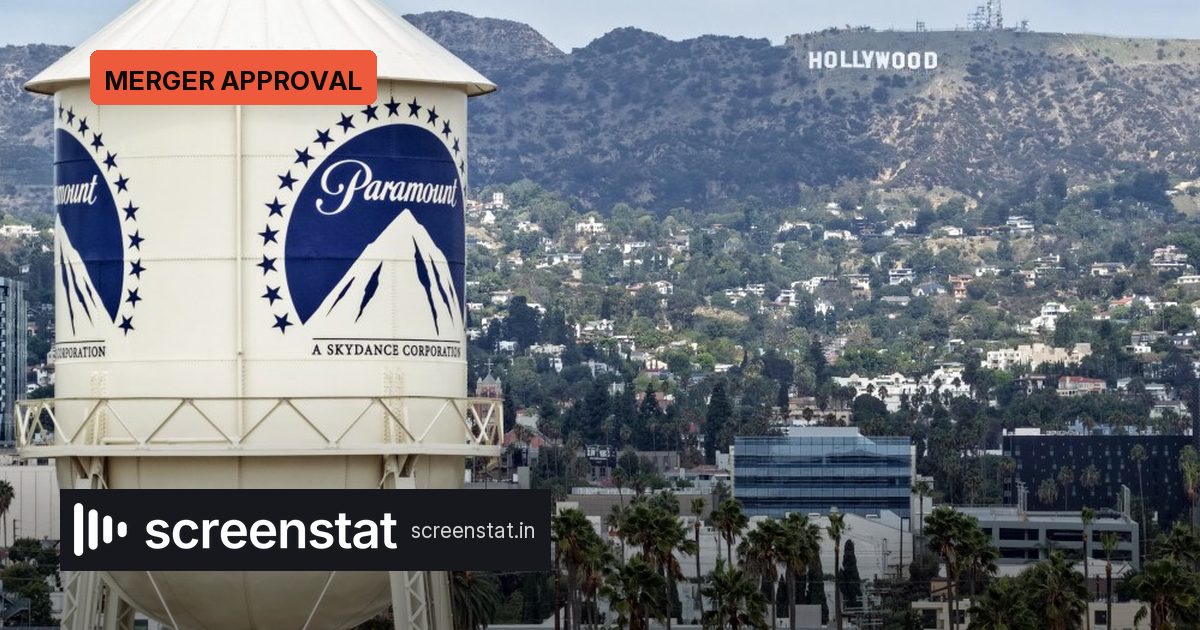
The proposed Paramount-Warner Bros. Discovery settlement is not final yet. The federal judge overseeing the state attorneys general antitrust case has scheduled a hearing after saying she still has “outstanding questions” about the consent decree’s factual and legal basis and how it would be implemented.
U.S. District Judge Araceli Martinez-Olguin granted the parties’ request to vacate the $1.88 billion bond hearing, which became moot after Paramount reached proposed settlements with the states and the WGA. She did not rule on the rest of the motion to enter the consent decree and dissolve the stipulation not to close. A remote hearing is set for 11:00 a.m. PST on Sept. 24, 2026.
Why the consent decree matters
For Paramount, this is the last approval gate before a deal expected to close in roughly two weeks. CEO David Ellison told staff he expected the Warner Bros. pact to close in that window, but the court’s questions make that timetable conditional.
For media planners, distributors and streaming buyers, the decree is not just legal process. Its terms set the supply of wide-release films, theatrical windows and editorial safeguards around CNN and CBS News in the combined entity.
What the proposed terms include
- No sale of the Paramount Studios or Warner Bros. lots in California for at least five years.
- At least an additional $300 million annually in U.S. film production, totaling $1.5 billion over five years.
- At least 30 theatrical releases in the first two years and at least 32 per year in years three through five.
- A 45-day theatrical window for wide-release films.
- A news editorial independence board to guide CNN and CBS News.
The commitments would run through the end of the fifth calendar year after closing. If the deal closes before the end of 2026, the settlement period runs to Dec. 31, 2031.
The state attorneys general settlement contains no structural remedies such as divestitures, even though California Attorney General Rob Bonta had earlier argued those would be necessary. His office said it is not uncommon for a court to schedule a hearing before approval; Paramount declined to comment.
What media planners should watch
The release commitment is a supply signal. A baseline of 30 wide-release titles in the first two years, then 32 in years three through five, gives buyers a concrete volume estimate for theatrical campaigns and downstream windows. The 45-day window also sets a planning horizon for how quickly films move to other distribution channels.
Editorial independence is the other business risk being resolved. The board is intended to shield CNN and CBS News from commercial interference, which matters to news advertisers and distribution partners that want stable brands.
The headline number is not just $1.5 billion in production spend; it is the judge’s unresolved questions. Until the consent decree is approved, the merger cannot close, and forward planning should treat the two-week timeline as provisional.
Source: Variety