India’s theatrical business is on track for its strongest year since the pandemic, according to Girish Johar, head of distribution and revenues at Zee Studios. Speaking at WAVES Film Bazaar, the market held alongside the 57th International Film Festival of India in Goa, Johar said 2026 could deliver the highest box office of the post-COVID period if the remaining weeks of the year go as expected.
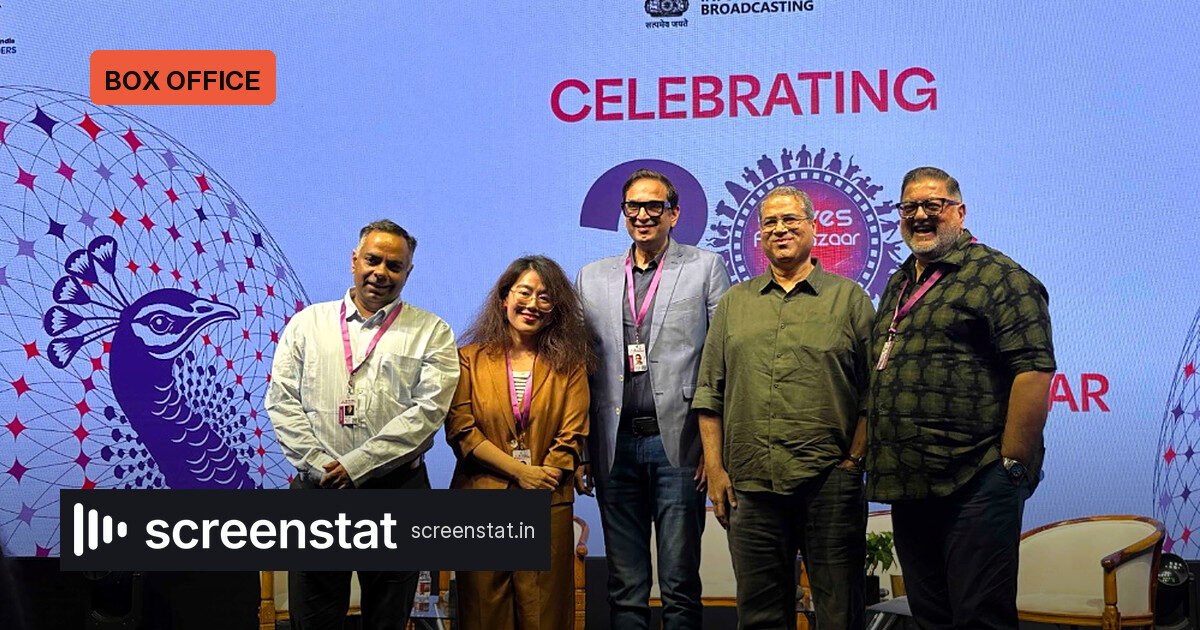
The forecast came during a panel titled One Film, Multiple Paydays: Extracting a Film’s Full Value, moderated by producer Vikramjit Roy. The discussion put film economics ahead of buzz.
Content is the draw, not the actor
Johar was direct about what is driving the upswing. “Audiences are loyal to content, IP, and characters,” he said. Stars, he argued, are no longer the key factor in a film’s success. He also suggested streaming fatigue has helped lift box office, because audiences still want the social experience of the big screen.
He cautioned that small films can destroy their own momentum by expanding too fast. “They want to scale from 200 screens to 1,000 screens, which can kill the film,” Johar said.
IP as an insurance policy
Aashish Singh, producer at Shah Rukh Khan’s Red Chillies Entertainment, framed intellectual property as a long-term hedge. “Your intellectual property is actually your insurance policy for the future,” he said. Singh noted producers typically acquire IP through buy-outs because they take the financial risk, but ownership and revenue-sharing remain open to negotiation. He advised writers to register their work with the Screenwriters Association.
Singh said studios aim to recover 60% to 70% of a film’s budget through pre-sales over time, across OTT, satellite and music, though satellite sales have become more challenging.
A sharper distribution toolkit
Ashish Saksena, COO of cinemas at BookMyShow, said the ticketing platform shares audience insights and market intelligence with producers so they can see where a film is finding traction and where further marketing spend is needed. His core principle: “You cannot pitch every film to everyone in India. You have to be very segmented and targeted.”
For independent films, Saksena pointed to transactional video-on-demand through BookMyShow Stream and screening slots at Red Lorry Film Festival as practical routes to an audience.
Esther Li of Hong Kong-based Mirage Films offered an international perspective, citing the China success of Aamir Khan’s Dangal and the Vijay Sethupathi-starrer Maharaja. Chinese audiences responded to social concerns, inspirational qualities and distinctive humour, she said, and Indian love stories remain an emotional theatrical draw. Her advice: develop a distinctive creative identity with a unique voice, visual style and film language.
What to act on
- Treat IP as a multi-year asset; register scripts with the Screenwriters Association.
- Model pre-sales at 60–70% of budget across OTT, satellite and music.
- Use audience data to segment campaigns, not a single national pitch.
- Keep small films on a controlled screen expansion instead of rushing to 1,000 screens.
Panelists noted that Indian cinema still lacks an international breakout on the scale of Bong Joon Ho’s Parasite, which could open new markets. For now, the domestic business is the immediate prize, and the final weeks of 2026 will decide whether the forecast holds.