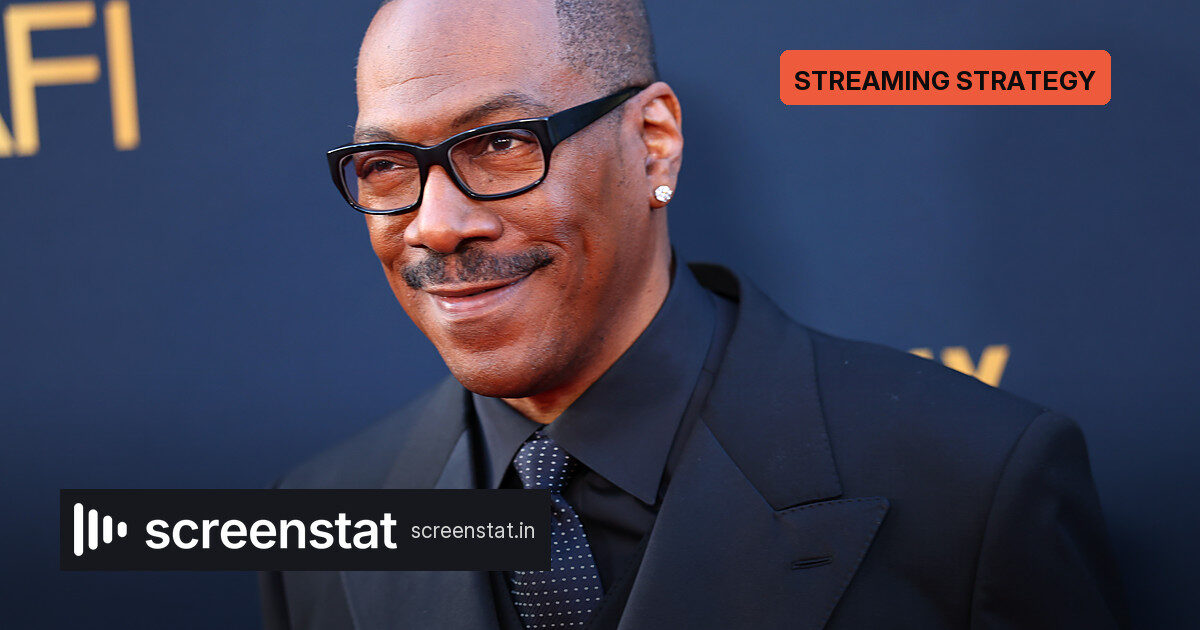
Eddie Murphy is attached to star in The Chairman, a Peacock drama in development from Mad Men creator Matthew Weiner.
Plot details have not been revealed. But for a streaming business audience, the package is the headline: a global movie star making a rare move into scripted series television, paired with one of prestige TV’s most awarded showrunners.
The series is being produced by 101 Studios and Universal Television, a division of Universal Studio Group. NBCUniversal framed the project as the first under its relationship with 101 Studios CEO David Glasser and Chris McCarthy through McCarthy’s overall deal with NBCUniversal.
The assets matter more than the premise
Weiner won nine Emmys, created and ran Mad Men for seven seasons, and was a writer and executive producer on The Sopranos. Murphy has not held a TV series regular role since his Saturday Night Live run from 1980 to 1984, before building a film career that spans Beverly Hills Cop, The Nutty Professor, Dreamgirls and the Shrek voice franchise.
- Murphy: first series regular role since leaving SNL.
- Weiner: nine Emmy wins across a prestige TV career.
- Producers: 101 Studios and Universal Television.
Why it matters for streaming buyers
Peacock can market The Chairman as an event before a single story detail is public. That is the practical value of a talent-led package: awareness is built long before a premiere date, and media planners can treat the casting news as an early indicator of where the platform will concentrate subscriber acquisition effort.
It also reinforces the broader migration of film stars into episodic streaming, where long-form storytelling and platform economics now compete with theatrical projects for top talent.
The talent-package test
When a streamer attaches a creative trio before a premise exists, it is making a distribution bet: the names lower the cost of customer attention. For buyers, that changes campaign timing. Instead of starting at the trailer, planning can begin at the announcement, because the audience segments — Murphy’s comedy and film base and Weiner’s drama base — are already identifiable.
There is still execution risk. Development does not guarantee a series order, and a thin premise can dampen word of mouth even with big names. But the initial marketing math is clear: attach known quantities, build an audience pool early, and use the show itself as a retention lever once details arrive.
What to watch next
For entertainment marketers, the next meaningful checkpoints are a formal series order, a premise reveal and a launch window. Until then, the lesson is to sell the creative package rather than wait for plot details: name recognition and showrunner pedigree are the marketing hook.
- Track talent attachments as early demand signals.
- Segment campaigns by star and showrunner fan bases.
- Delay creative-specific spend until the premise or trailer clears.
If the project moves forward, expect Peacock to front-load campaigns around Murphy and Weiner, and likely time a subscriber push to the premiere announcement.
Source: The Hollywood Reporter