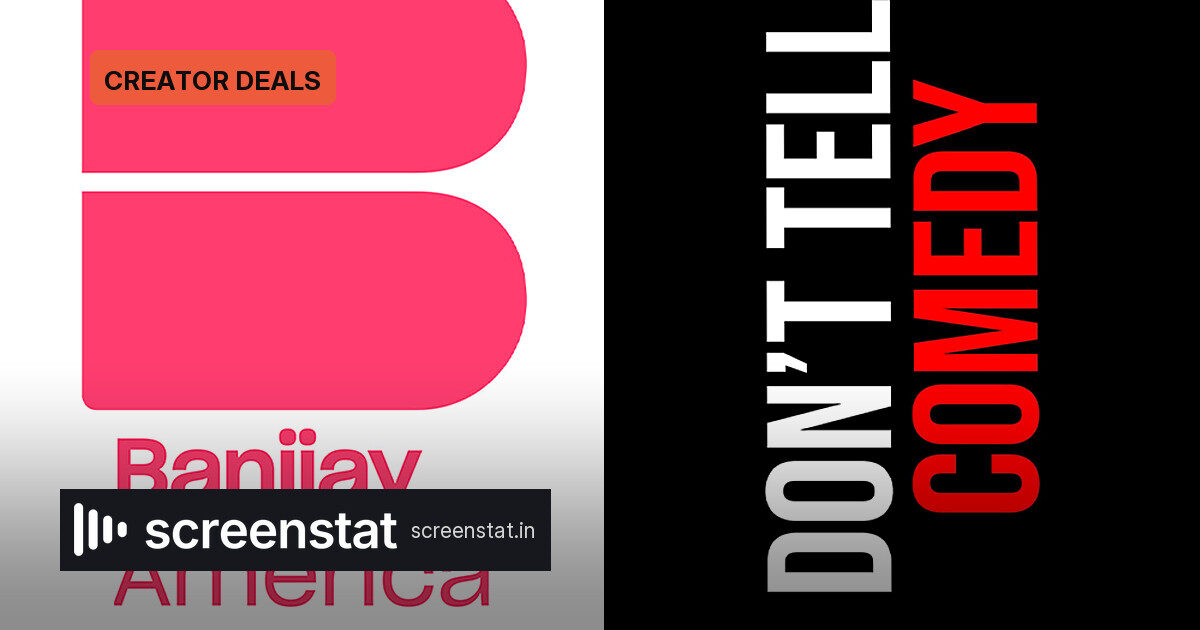
Banijay is making a structured play for creator-led comedy. Don’t Tell Comedy, the U.S. stand-up brand that grew out of a Los Angeles backyard, will put its 115-hour stand-up library into Banijay’s global distribution pipeline. Banijay America is partnering on the brand side; Banijay Rights will handle international sales and platform relationships.
What the deal covers
The agreement takes Don’t Tell’s library to ad-supported and subscription platforms internationally: AVOD, FAST and SVOD, including Prime Video Direct. Banijay will also launch dedicated Don’t Tell Comedy YouTube channels, aiming at the platform’s growing share of viewing on television screens. The partners plan curated longer-form compilations, specials tailored to different streaming audiences, and new brand and financing opportunities.
- 115 hours of stand-up content enter global distribution.
- 14 million followers come attached to a social-first comedy brand.
- 1.5 billion annual views already flow to its short taped specials online.
Why this matters for the screen business
This is a distribution-window story as much as a comedy story. Don’t Tell built audience with secret-location live shows—more than 5,000 a year worldwide, with the U.S. as its biggest market—and free short-form specials online. Banijay’s pitch is that those clips can be reshaped into windowed catalogue product: short clips for social, curated compilations for AVOD and FAST, and specials for SVOD.
For media planners and streaming buyers, the useful signal is the shift from follower-count thinking to library economics. A creator brand with high reach but fragmented content gets access to Banijay’s infrastructure across 25 territories and an average of 19,000 hours of content a year. Ben Samek, CEO of Banijay America, called the deal “another leap into the creator landscape.”
What to watch next
Don’t Tell’s origin maps a path for creator-led formats: start local, distribute free social content, then license the catalogue. Comics who came through Don’t Tell stages include Ralph Barbosa, Robby Hoffman, Michael Longfellow of SNL, Katherine Blanford and Malik Elassal. The Banijay relationship may turn that talent pipeline into longer-form development.
Banijay has been pushing digital formats: it moved Somebody Feed Phil from Netflix to YouTube, built Phil Rosenthal World, put a Bundesliga rights package behind Jamie Vardy’s Having a Party, and is developing creator-led formats like Stop the Train and Let’s Play Ball. The Don’t Tell deal is the next test of that strategy for a purely digital comedy brand.
For buyers, the practical move is to track how the library is windowed. If AVOD and FAST placements start drawing significant hours, expect more creator catalogues to be repriced as library assets rather than marketing channels.
Source: Deadline