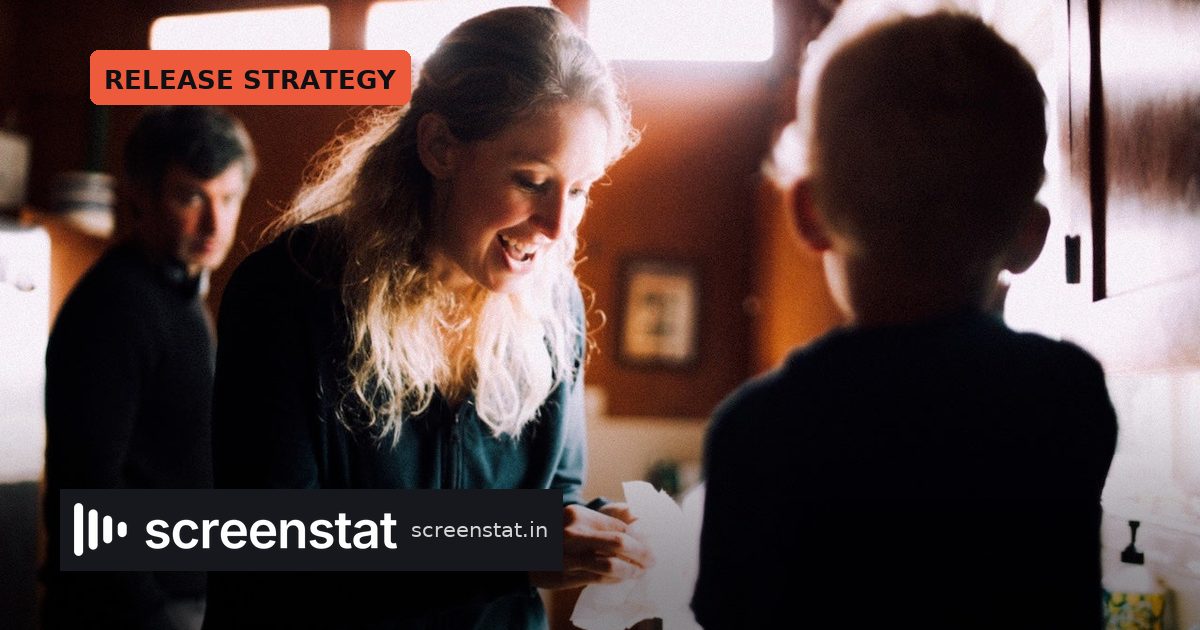
The Telluride Film Festival’s annual secret screening is usually a guessing game. This year it delivered one of the most commercially loaded nonfiction titles of the season: You Can See Everything, a documentary from Nathan Fielder and Lance Oppenheim built around convicted Theranos founder Elizabeth Holmes.
Per TheWrap, the film screened Sunday night at the Werner Herzog Theater under strict lockdown. Phones and any recording-capable devices were sealed into pouches on entry to stop social clips leaking. A24, the distributor, dropped a teaser at the top of the screening, then asked the room to stay quiet on specifics until the film reaches select theaters on Oct. 16.
What is actually on the table
The access is the story. According to the report, Holmes invited Fielder and Oppenheim to film her 34 days before she reported to federal prison in Bryan, Texas, on May 30, 2023 — and the shoot stretched into a three-year project. Holmes was found guilty in 2022 on four counts of defrauding investors, and had been denied a request to delay incarceration after the birth of her second child in early 2023. She had not spoken to media since 2016.
The origin story is almost as odd as the subject: Fielder said the idea emerged after a night at the Magic Castle in Los Angeles in 2023, where Holmes’ name came up as an audience suggestion during a magic act. Oppenheim then relayed a rumour that Holmes and her boyfriend Billy were shopping a documentary and had approached A24 themselves. Emma Stone, who worked with Fielder on The Curse, moderated the post-screening conversation. The filmmakers said nothing was pre-planned.
Fielder’s framing of the ethical problem was the sharpest line of the night: “How reality changes based on your proximity to a person is a very real thing,” he said.
Why this matters commercially
The Theranos collapse has already been monetised across formats — a bestselling book, multiple documentaries, podcasts and an Emmy-winning miniseries. Holmes raised $945 million from investors including Rupert Murdoch and Larry Ellison, and assembled a board that featured former senators and two ex-secretaries of state. That is a story audiences have been sold repeatedly.
So the question for buyers and marketers is not whether people know the subject. It is whether a saturated IP can be re-sold on the strength of new access and a new authorial voice. A24 is betting yes, and its release design tells you how:
- Scarcity as marketing. Pouching phones and asking press to withhold plot detail converts a festival screening into a month-long tease rather than a spoiler dump.
- Auteur signalling. Fielder and Oppenheim are not neutral documentarians; the pairing is the pitch, and it reframes a familiar fraud story as an experiment in nonfiction form.
- Select theatrical first. A limited run on Oct. 16 builds review volume and cultural conversation before any wider or downstream window.
- Subject ambiguity as hook. TheWrap’s reporter openly asks whether Holmes is chasing a redemption arc, promoting something new, or running another play. Unresolved motive is a marketing asset.
The playbook to borrow
For anyone programming or marketing documentary content — including India’s OTT slates, where true-crime and corporate-fraud nonfiction has become a reliable performer — the lesson is that access plus voice beats subject familiarity. Audiences will revisit a story they think they know if the entry point is genuinely new. Where they will not show up is a re-cut of publicly available material with a fresh title card.
The second lesson is embargo discipline. A24 has effectively engineered word-of-mouth without word-of-detail: rave-adjacent reactions, zero plot leakage, one teaser. That is a repeatable, low-spend awareness tactic for any title where the twist is the product.
The number to watch is per-screen average in the opening frame on Oct. 16. For a limited-release documentary carrying this much pre-awareness, that figure will tell you whether curiosity converts into ticket buying — or whether Theranos fatigue is real.
Source: TheWrap