The news
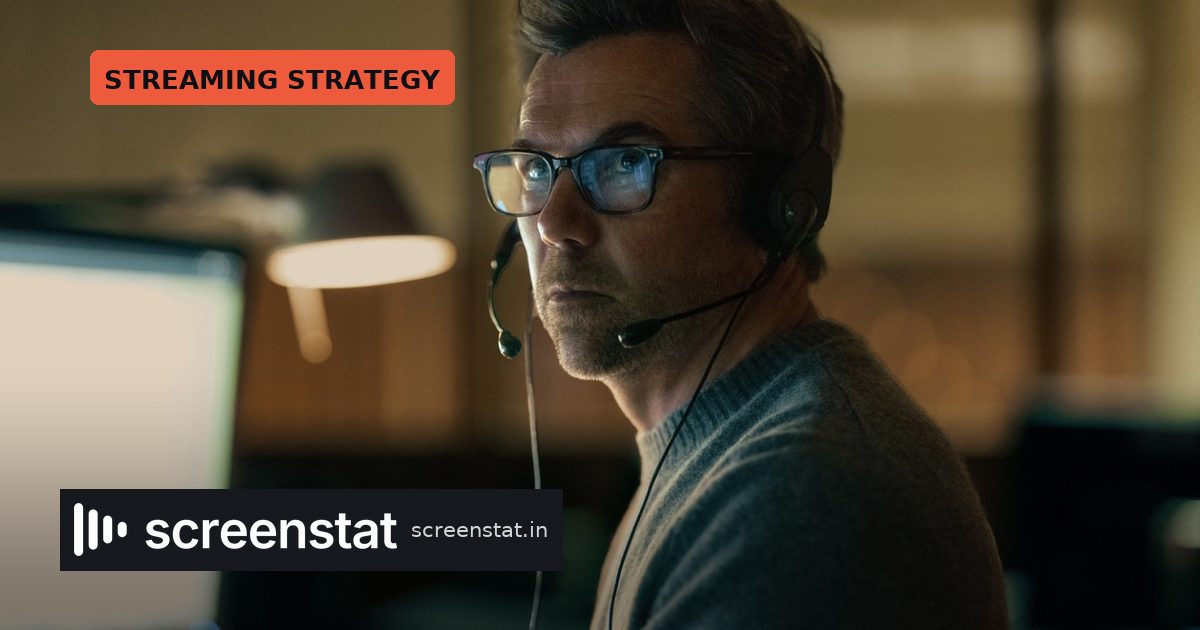
Apple TV has released Last Seen, a six-episode Australian drama starring Patrick Brammall as Ian Ridley, a police dispatcher and former head of a Criminal Investigative Unit whose daughter vanished 11 years earlier. Human remains surfacing after a storm reopen the case and Ian’s own unraveling. The series was adapted by Kris Mrksa from Ryan David Jahn’s novel The Dispatcher and directed by Christian Schwochow.
The ensemble is a mix of local and UK names: Maxine Peake, Brendan Cowell, Daniel Henshall, Jessica Wren, Chloe Jean Lourdes, Tobias Muhafidin and Zahra Newman. The Hollywood Reporter’s review calls it a solid showcase for Brammall despite plot holes, praising Lourdes in particular.
Why the format is the real story
Six episodes, most running under 50 minutes. That is roughly four and a half hours of content — a single-weekend commitment, not a season-long habit. For anyone tracking how streamers are budgeting attention rather than just money, that number matters more than the review score.
Short-run, closed-ended thrillers have become the default unit of streaming drama for three reasons:
- Completion rates. A six-parter under 50 minutes an episode is far likelier to be finished than a 10-part hour-long, and completion is what feeds recommendation engines and retention models.
- Marketing efficiency. One launch, one press cycle, no renewal risk to manage.
- Talent access. Actors with film and multi-show schedules — Peake, Brammall — can clear a six-episode block.
The trade-off, as the review notes, is compression: character arcs accelerate faster than plausibility allows, and narrative gaps get left open not as setup for a season two but simply unresolved. That is the structural cost of the format, and it shows up across the crime-thriller shelf, not just here.
The Brammall data point
Brammall lands on two platforms in two days: Last Seen on Apple TV, then the third and final season of Colin From Accounts on Paramount+, which he co-created and stars in with Harriet Dyer. That series closes out at 24 episodes across three seasons. He is also known to global audiences as Kristen’s husband on Evil and, to a much younger demographic, as the voice of Uncle Rad in Bluey.
For programmers and media planners, that cross-platform week is the interesting bit. A mid-tier international actor now carries recognition equity built across four different services and audience cohorts. Casting decisions increasingly hinge on that kind of multi-platform familiarity rather than on domestic star power in a single market.
What it means for the Australia-and-beyond pipeline
Australian production has been a reliable supply line for global streamers: English-language, well-priced, distinctive landscapes, and local quota and incentive frameworks that reward commissioning. Last Seen uses that setting deliberately, contrasting small-town Port McKenna’s beauty and community values against the horror at the story’s centre.
The lesson for Indian commissioners is the same one Nordic and Australian producers learned earlier: a specific, non-metro location plus a tightly closed six-episode structure travels better than a sprawling anthology. India’s OTT crime slate already leans on regional settings; the discipline still missing is episode count and runtime.
What to watch
Track whether Apple TV keeps the six-episode international thriller as a recurring slot rather than a one-off, and whether Colin From Accounts wrapping at 24 episodes signals more finite-run comedy commissions. Both are supply-side signals about how much content a platform thinks it needs per subscriber, per month.
Source: The Hollywood Reporter