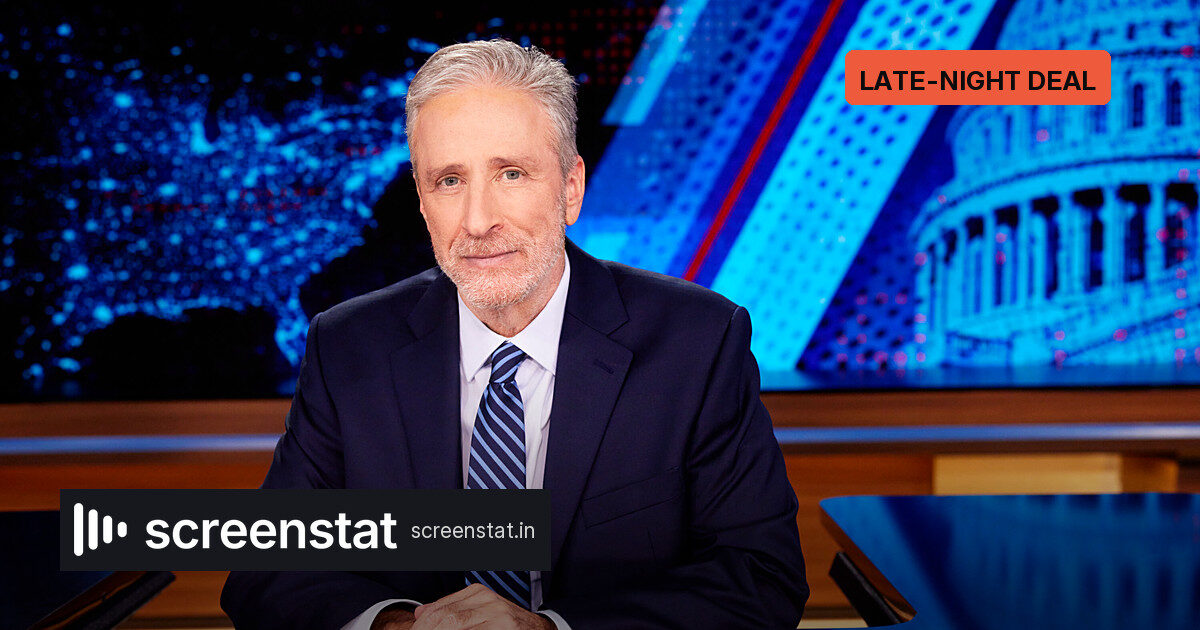
Jon Stewart has signed a two-year deal to remain a host and executive producer of Comedy Central’s The Daily Show through 2028. He will keep his Monday-night role, while Ronny Chieng, Josh Johnson, Jordan Klepper, Michael Kosta and Desi Lydic rotate on the other nights.
His previous agreement, signed in November 2025, ran only through the end of this year. The new deal removes a near-term renewal negotiation and locks the show’s anchor voice into place.
Skydance’s first late-night call
The extension is the first major late-night talent announcement from Skydance since it completed its acquisition of Warner Bros. Discovery. It also looks intended to quiet speculation that political comedy might be cut. CBS had canceled The Late Show with Stephen Colbert before Skydance took control of Paramount last year, leaving an open question about how the new owner would treat another signature political format.
George Cheeks, Co-Chair and Chief Content Officer at Skydance TV, called Stewart “a generational talent” and described The Daily Show as “a cornerstone of Comedy Central.” That is a clear statement that the franchise remains a priority.
Why the 2028 window matters
The two-year term positions Stewart for another U.S. general election. For media planners and entertainment marketers, that is the practical headline: a stable host and editorial brand through a high-attention political cycle. Instead of facing another renewal or cancellation risk soon, advertisers can approach election-year sponsorship windows with more confidence.
The renewal also puts Stewart under the same corporate umbrella as John Oliver, whose one-year deal runs through the end of 2027. It does not restore a full-week Stewart schedule, but Monday nights remain the marquee slot.
What to watch next
- Whether Skydance packages The Daily Show audience across its newly merged assets.
- How quickly advertisers seek election-cycle late-night inventory.
- Whether the rotating cast gets deeper investment now that Stewart’s role is settled.
For the business, the signal is direct: under new ownership, the franchise is being treated as an asset to keep, not a cost to cut.
Source: Deadline