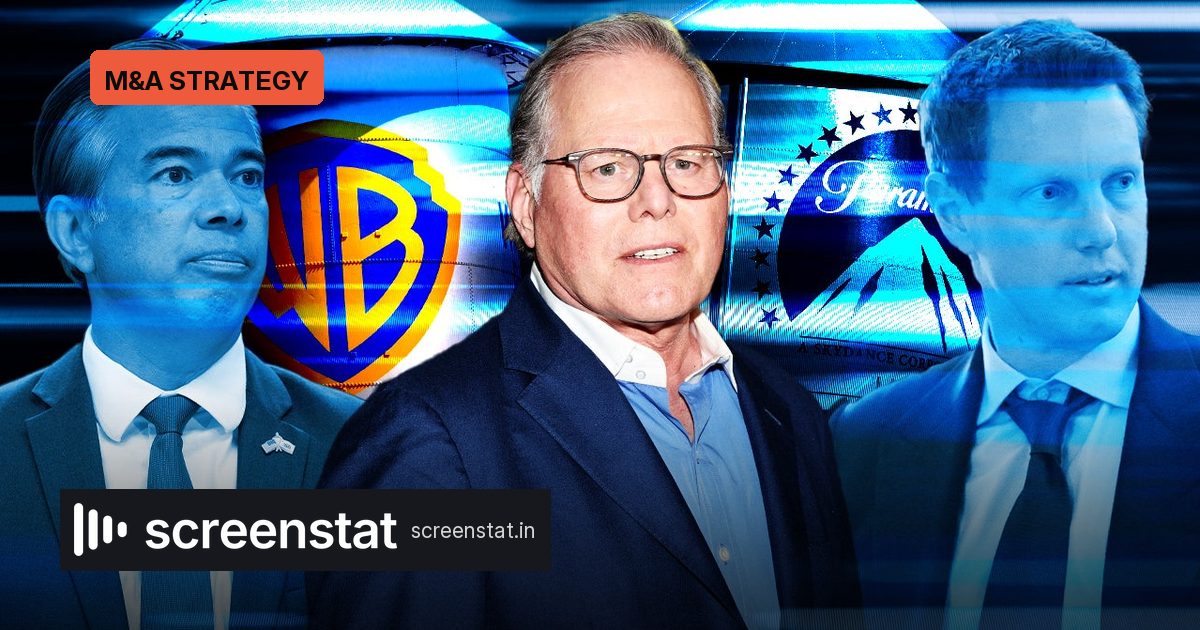
Warner Bros. Discovery’s future looks less like a single rescue and more like a forced restructuring if the $110 billion Paramount merger falls apart. Experts interviewed by TheWrap say a collapse would not be fatal—WBD would keep a $7 billion breakup fee—but management is unlikely to run the company independently for long.
The fallback math
The stock has climbed 44% over the past year, and analysts see a sharp reversal if the deal breaks. That would renew pressure on CEO David Zaslav to unlock value rather than manage a shrinking linear TV business.
- Studio and streaming: Bloomberg Intelligence estimates the segment is worth $70.2 billion. Morningstar’s Matthew Dolgin called Netflix a “perfect suitor,” with Apple and Amazon also theoretically attractive but showing no signs of interest.
- Linear networks: Valued at $17.86 billion. Possible buyers named in the report include Nexstar, IAC’s Barry Diller, Apollo Global Management, RedBird IMI, Stonepeak, BC Partners, Carlyle, Crestview, GTCR and Berkshire Partners.
- IP and individual assets: Piecemeal sales are viewed as more likely than another big deal. Some potential buyers are already reported to be circling assets such as New Line Cinema if divestitures become part of a settlement.
Dolgin said the economic case for a split remains: “One way or another, the ability to unlock value offsets any potential operating benefit from keeping the company together.” Wharton professor Paul Nary was more blunt: “The time to split was yesterday.”
What the interim operating covenant allows
While the merger is pending, WBD operates under an interim covenant. It can handle day-to-day operations and has broad flexibility to renegotiate licensing and distribution renewals with existing partners, provided those deals do not extend past December 2028. Paramount would have first negotiation rights after that point.
The constraints are structural. WBD cannot enter or modify material contracts or collective bargaining agreements, overhaul executive compensation, enter new lines of business, pursue large-scale M&A or restructurings, or take on more than $60 million of new indebtedness outside specified exceptions. Certain IP and content deals with thresholds ranging from $30 million to $400 million may require Paramount’s approval.
Former HBO program strategy VP Andy Goldman described the logic simply: “You can complete the deals you’re working on, but they don’t want more money going out the door until everything is settled.”
Why the clock matters
Settlement talks with California Attorney General Rob Bonta and 11 other state AGs are expected to begin Oct. 14, with a daily ticking fee of $7 million starting Oct. 1. WBD and Paramount maintain the deal will close, but experts say WBD could also negotiate an extension of the June 4 deadline if Paramount appeals a court decision. “At some point, you have to give up the ghost,” said Greif & Co. CEO Lloyd Greif.
Qualia Legacy Advisors’ Aaron Meyerson compared the situation to the AT&T-Time Warner fight: a 20-month antitrust battle that may have cost WarnerMedia its early streaming head start. “Every quarter WBD spends in structural limbo is a quarter Netflix and Disney don’t have to,” he said.
For now, the company says no projects are on hold. John Oliver, Ryan Condal and John Wells have extended contracts, although Quinta Brunson moved her overall deal to Disney. The real strategic question is whether WBD uses a breakup fee to fund a cleaner split—or waits too long while the value of linear assets erodes.
Source: TheWrap