
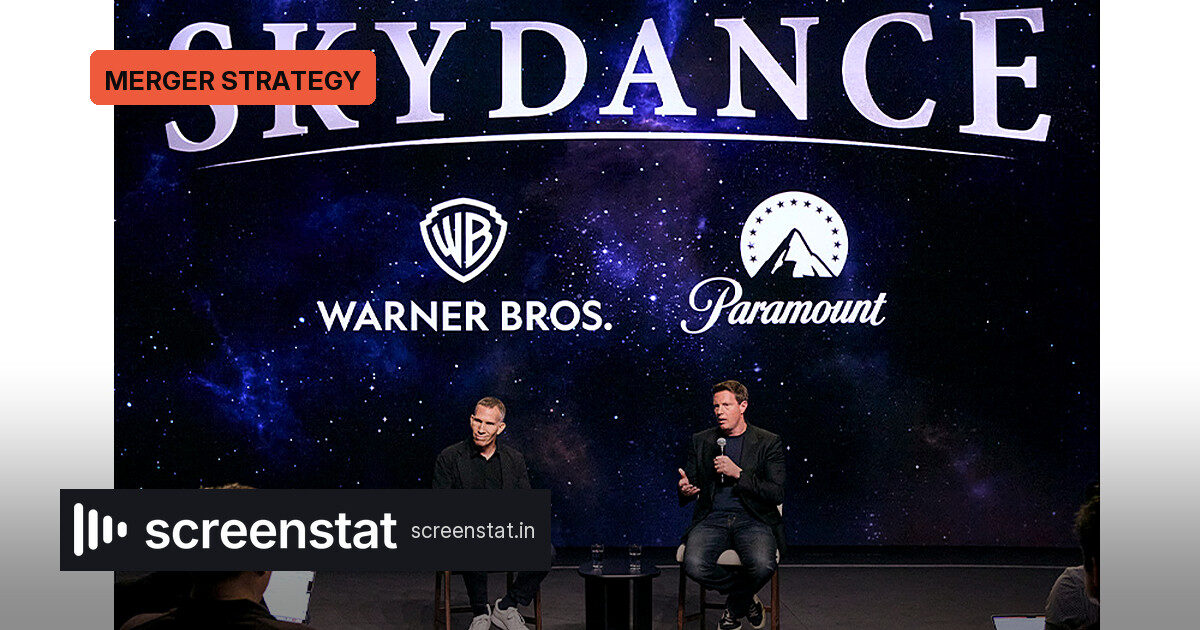
Skydance has completed its $110 billion combination of Paramount and Warner Bros Discovery, and CEO David Ellison used the first press event at the Paramount lot to name the immediate priority: rebuilding trust after a bruising takeover fight.
Deal finally closes after antitrust battle
The merger closed just hours before Ellison and co-CEO Ynon Kreiz met reporters on Tuesday. The year-long process saw Paramount outmaneuver Netflix and Comcast, then settle two antitrust lawsuits; the agreement included a consent decree requiring the combined company to release at least 30 theatrical films a year.
Ellison did not soften the history. He described the process as turbulent and at times ugly, and said the company must now turn the page and operate in “the business of rebuilding trust.” Follow-through, he argued, is the test—hitting the 30-film theatrical commitment shows the creative community the merger can deliver.
Why Ellison says consolidation was inevitable
Ellison framed the deal as a delayed correction. Legacy Hollywood, he said, let Netflix, Amazon Prime Video, Apple and YouTube disrupt its economics instead of transforming itself. “If you don’t disrupt your business, somebody else will do it,” he said, adding that the Skydance combination is meant to compete with Disney, Netflix and Amazon globally.
He also spoke directly to the creative community that opposed the merger, pointing to his own producer background on Top Gun: Maverick and Mission: Impossible films. His response to critics was simple: give the company time to prove the outcome.
The numbers media planners should watch
Behind the trust pitch are hard figures that will shape entertainment marketing in the near term:
- $110 billion: deal size, now closed after regulatory and legal hurdles.
- 30 films: minimum annual theatrical releases under the consent decree.
- Nearly $80 billion: the debt load the company must service, with layoffs expected but not discussed on record.
For buyers and planners, the immediate signals are distribution volume and cost discipline. A mandated theatrical slate creates release-marketing work and box-office tracking demand; the debt burden raises the odds of tighter content budgets, co-productions and ad-supported streaming pushes even as the company talks scale.
What to watch next
Skydance sent a memo to employees, held a town hall, and laid out goals for streaming, cable and film. The unanswered question is where debt-driven reductions fall. Ellison’s public bet is that scale plus follow-through will rebuild trust; the market will judge the company by its release slate and balance sheet, not by its opening-day message.
Source: Deadline