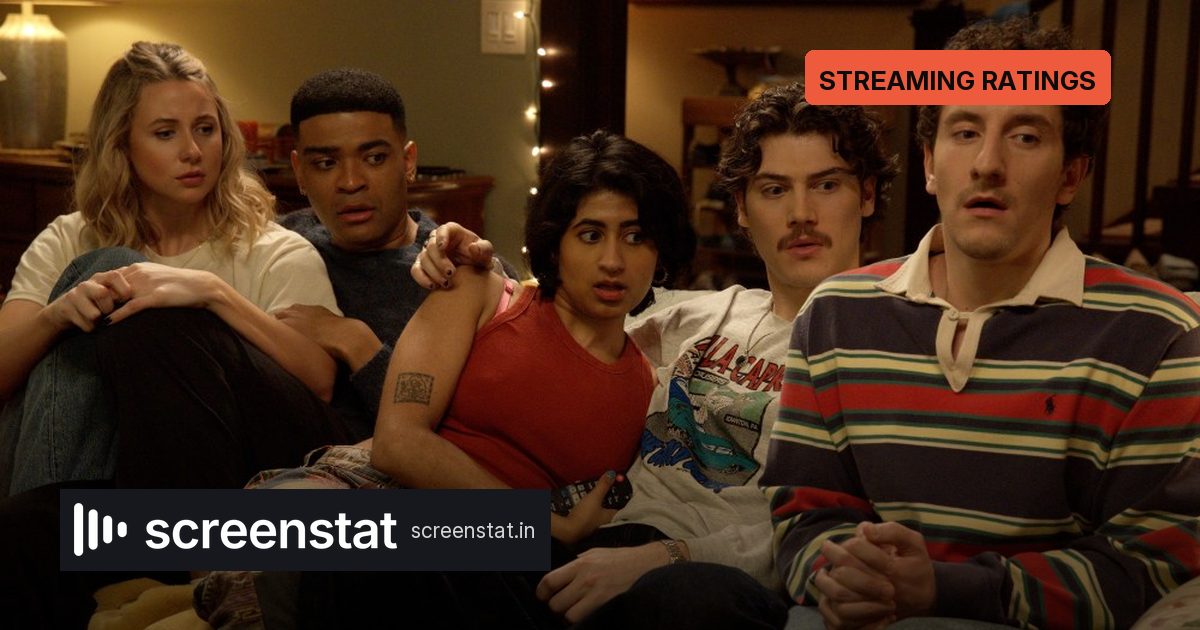
FX comedy “Adults” has become a meaningfully bigger title in its second season. Disney says Season 2 drew 40% more viewers than Season 1 across Hulu and Disney+ globally after 12 days of viewing. The company did not disclose exact streaming counts, so the read here is directional, not a raw total.
The show follows five twenty-somethings in New York — Samir, Billie, Paul Baker, Issa and Anton — living together in Samir’s childhood home. Co-creators Ben Kronengold and Rebecca Shaw executive produce with Nick Kroll, Sarah Naftalis, Jonathan Krisel, Alicia Van Couvering and Rob Rosell, with FX Productions as the studio.
International viewing doubles
The sharpest movement came outside the US. International viewership climbed 100% versus Season 1, a sign that the New York ensemble is finding room to run globally. For a comedy that initially leaned on Gen Z cultural references, that expansion matters: it suggests the show is now working on character dynamics more than local specifics.
Season 1 also caught a second wave. After the standalone prequel episode “Marathon Day” premiered July 31, a month before Season 2 dropped, Season 1 streaming viewership rose 50%. Prequel drops are often promotional afterthoughts; here the data points to a low-cost re-entry point that reactivated the library.
Critical reception moves to 100%
Rotten Tomatoes scores shifted from 77% after Season 1 to 100% for Season 2. Variety critic Alison Herman wrote that the first season strained for “zeitgeisty relevance” before the ensemble cohered, while Season 2 has “its own momentum.” The review attributes that change to cast rapport rather than sweeping statements about a generation.
The numbers to track:
- 40% — Season 2 lift over Season 1 across Hulu and Disney+ globally after 12 days
- 100% — international viewership increase
- 50% — Season 1 streaming lift since “Marathon Day” premiered
- 77% to 100% — Rotten Tomatoes score improvement
What it means for buyers
For media planners and entertainment marketers, the “Adults” numbers are a case study in sequencing. A standalone special dropped four weeks before a new season can double as both a creative bridge and a tune-in driver — especially when it sends audiences back to the prior season. That pattern is useful for AVOD and SVOD platforms trying to stretch a single title across a longer window.
International growth also changes the inventory conversation. If most of the Season 2 lift is coming from outside the US, ad-supported tiers and brand sponsorships should look at geographic mix, not just total reach. Disney’s reluctance to share base viewership leaves room for caution, but the direction is consistent across critical and audience metrics.
Source: Variety