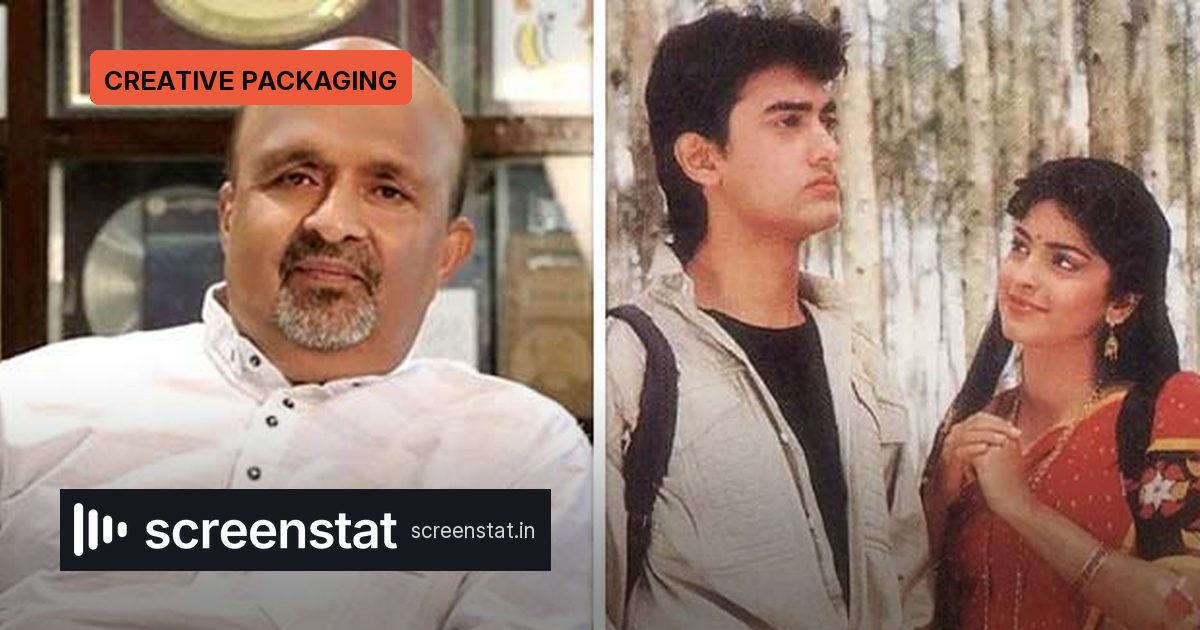
Lyricist Sameer has detailed how he lost a place on the 1988 Aamir Khan-Juhi Chawla breakout Qayamat Se Qayamat Tak just before the production locked its key creative team. The sequence, shared in a conversation with trade analyst Komal Nahta, shows how tightly creative packaging was controlled even when a new director was entering the film business.
Where the opportunity began
According to Sameer, he had become close to composer duo Anand-Milind while they were being considered for QSQT. Before feature approval, director Mansoor Khan was asked by his father, producer Nasir Hussain, to make a smaller work to prove command. That project, Umberto, was shot in Bandra and had two songs written by Sameer. The group would spend evenings at Mansoor’s bungalow with Aamir Khan and Anand-Milind, which put Sameer in position for the feature.
The compromise that cut him out
After Umberto impressed Nasir Hussain, the producer allowed the feature to move forward but wanted the family’s established collaborators: music director R D Burman and lyricist Majrooh Sultanpuri. Mansoor felt more comfortable working with newer talent, Sameer said, creating a standoff between father and son.
The resolution was a split deal. Sameer described the formula as “ek tera, ek mera” — one pick for each side. Anand-Milind stayed on as composers, while Majrooh Sultanpuri came in as lyricist. Sameer said he was out, using a phrase that captures the bluntness of the moment: “Aur main kat gaya.”
QSQT became a blockbuster and remains a reference point for Hindi film music. Mansoor Khan went on to work with Majrooh on Jo Jeeta Wohi Sikandar and Akele Hum Akele Tum. Sameer and Mansoor only connected on Josh in 2000, with Sameer writing ‘Hai Mera Dil’, ‘Hum To Dil Se Haar’, ‘Mere Khayalon Ki Malika’ and ‘Sailaru Sailare’.
Why this matters for entertainment buyers
This is more than a trivia item. It is a compact case study in how creative teams get assembled under producer influence. The compromise kept one legacy name in place while giving the debut director a younger composer team. The result worked commercially, but it also delayed a Sameer-Mansoor collaboration by more than a decade.
- Qualified bets: retaining one established name reduces perceived risk while still testing newer talent.
- Debut directors can lose control of music packaging even after proving themselves on a smaller project.
- Breakout titles create long-running templates — QSQT’s sound and lyrics shaped the musical grammar that followed.
- Delayed collaborations matter in talent flows; the Sameer-Mansoor pairing only monetized with Josh in 2000.
For streaming and film commissioning teams, the lesson is clear: when greenlighting a first-time filmmaker, players should document decision rights over key creative roles early. Otherwise, a compromise can quietly shift the credits — and the IP’s commercial memory — before production begins.
Source: bollywoodHungama.com