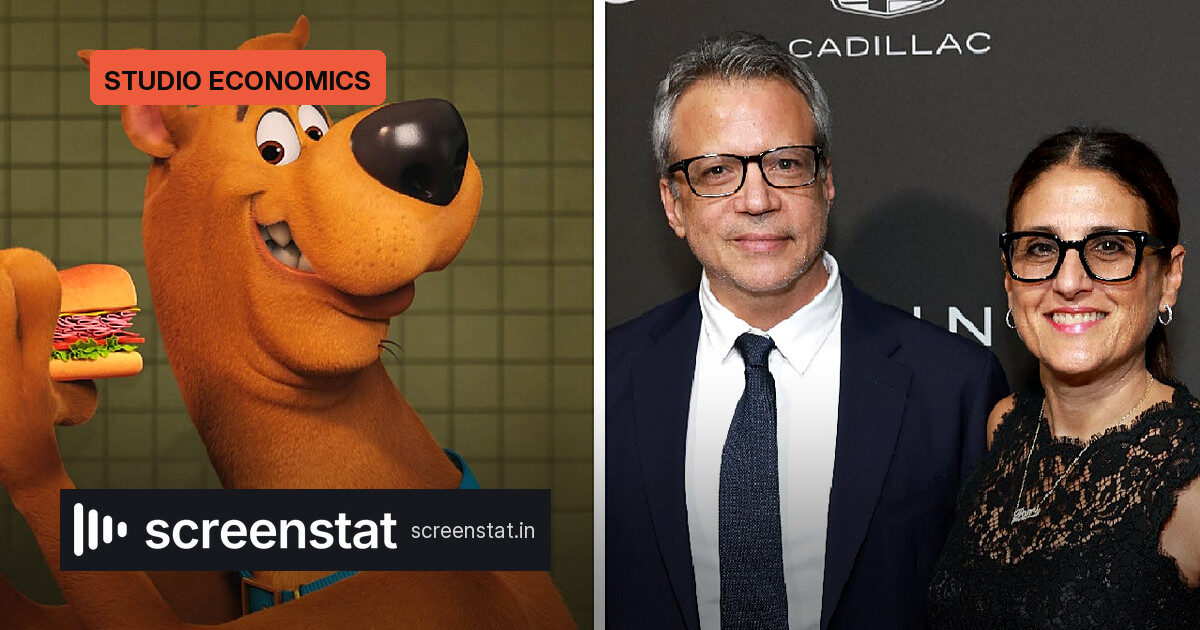
Michael Kurinsky, the director of the completed but never-released Scoob! Holiday Haunt, isn’t offering sympathy to outgoing Warner Bros. film chiefs Mike De Luca and Pamela Abdy. After Paramount-Skydance CEO David Ellison called each executive on Friday to confirm they would not be part of the merged company, Kurinsky posted on Instagram: “Hurts, doesn’t it?”
The dig refers to a much earlier call, when Warner Bros. Discovery told the director that the finished animated sequel would be shelved for a tax write-down. Kurinsky told Variety at the time that executives explained the film was being treated as a write-off and could not be monetized.
The tax math behind the shelf
Warner Bros. Discovery pulled Scoob! Holiday Haunt after production had wrapped in 2022, alongside a live-action Batgirl and the Looney Tunes feature Coyote vs. Acme. The accounting logic was simple: declaring the projects as losses let the studio recover a portion of production spend through a tax write-down. But a write-down only softens the financial hit; it does not create a release window, a marketing campaign or a franchise continuation.
That distinction matters for the screen business. A finished film has option value: it could be licensed, sold or re-released, and it sits in the library instead of decaying on a balance sheet. The decision to bury it also has a human cost. Directors and producers remember which executives made the call, and Kurinsky’s post is a small but public example of that goodwill turning negative.
The $93 million counterpoint
The strongest rebuttal to write-down logic comes from Coyote vs. Acme. After the film was pulled for tax purposes, Ketchup Entertainment acquired it for close to $50 million and released it in August. Since then, it has earned more than $93 million globally. That is not a finished film that deserved to disappear; it is an asset someone else made work.
For media planners and entertainment marketers, the lesson is not that every shelved title is a hit. It is that the cost of a write-down should be calculated against forgone distribution, licensing and franchise value, not only the immediate tax benefit. When a studio writes off a completed project, it removes the asset from circulation and hands the market a signal that the title is damaged, even if the film itself was finished and marketable.
- Scoob! Holiday Haunt was completed and shelved in 2022 for a tax write-down.
- Batgirl remains unreleased.
- Coyote vs. Acme sold to Ketchup for close to $50 million and has grossed more than $93 million globally.
What this means under new ownership
De Luca and Abdy’s exit removes the executives who oversaw Warner Bros. film during those write-down choices. With Paramount-Skydance now in control, the question is whether the combined studio treats completed projects as stranded costs or as deal inventory.
That is the number to watch. Write-downs are a balance-sheet solution, but they are also a content strategy decision. Coyote vs. Acme just showed the difference.
Source: TheWrap