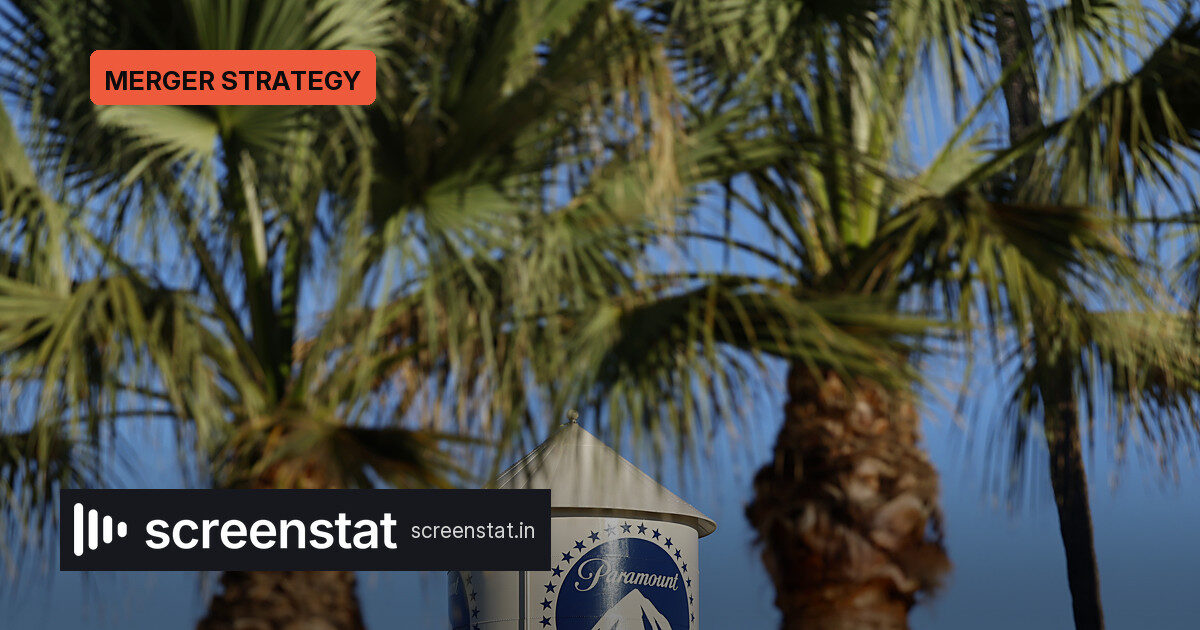
The long-awaited Paramount and Warner Bros. Discovery combination has a corporate name: Skydance.
CEO David Ellison announced the identity Friday in a post on X. The $110 billion merger is expected to close Tuesday, after a year-long pursuit and a two-month delay caused by antitrust suits from 12 states and the Writers Guild of America.
A name built to keep both studios visible
“What once was the peak, is now just the beginning,” Ellison wrote. “Together, we are Skydance: a creative-first home for bold, quality storytelling.”
The structure is deliberate. Ellison said the company did not want a new corporate identity to diminish or overshadow either studio. Instead, Paramount and Warner Bros.—and the rest of the portfolio—stay consumer-facing under the Skydance umbrella.
From awkward interim names to a neutral parent
The naming path was not smooth. After Skydance acquired Paramount in August 2025, the company first used “Paramount, a Skydance Corporation,” later simplified to “Paramount Skydance Corporation.” In the absence of an official name, industry shorthand like “WarnaMount” or “ParaBros” had filled the gap.
A neutral parent label became more important after the WBD merger: the five-year consent decree settling the state and WGA antitrust challenges requires separation of Paramount and WBD operations in several business areas. A name that appeared to favor one studio could have added legal and political friction.
What the rename actually changes
- Paramount and Warner Bros. remain the public-facing studio brands. The consumer labels stay in the spotlight.
- Skydance becomes the corporate parent. It is a holding identity, not necessarily the media-planning label.
- Discovery exits the corporate title. The cable-era name goes off the marquee after Discovery Communications went public in 2008.
The buyer’s read
For media planners and entertainment marketers, the short-term change is mostly structural. Existing negotiations and planning should still anchor on the studio and platform brands, not the new umbrella. The practical task is to watch for any corporate-level inventory, sales or bundling changes once the deal closes.
The long-term test is brand meaning. Skydance now has to mean something to commercial partners and audiences beyond an org chart. Keeping the legacy studio names in front gives the company room to build that brand without asking buyers to relearn where to spend.
Source: Deadline