The United States is finally moving toward something it has never had: a national production subsidy. Members of Congress are drafting a bill that would create a 20% federal film and television incentive, with bonus tiers that could push the credit to 30%, according to Variety. The legislation is expected to be introduced this month, possibly within days.
What is in the draft
The base credit would cover 20% of labour costs — both below-the-line crew and above-the-line talent. Eligibility is broad: feature films, scripted series, animation and reality TV all qualify. News and sports broadcasts do not.
On top of the base, the draft includes four “uplifts” of five percentage points each. Producers can claim up to two, capping the federal credit at 30%. Per the report, the qualifying criteria are:
- Filming in a rural opportunity zone
- Making an independent production
- Repatriating a certain volume of shooting from overseas
- Spending at least $10 million across 10 different states in a single year
Critically, the federal credit would stack on top of existing state incentives. In the most generous states, that could take total public support past 60% of qualifying spend. The credit is not refundable, but it can offset federal income tax or be sold to another taxpayer — a transferability feature that matters enormously for independent producers with little tax liability of their own.
Who is behind it
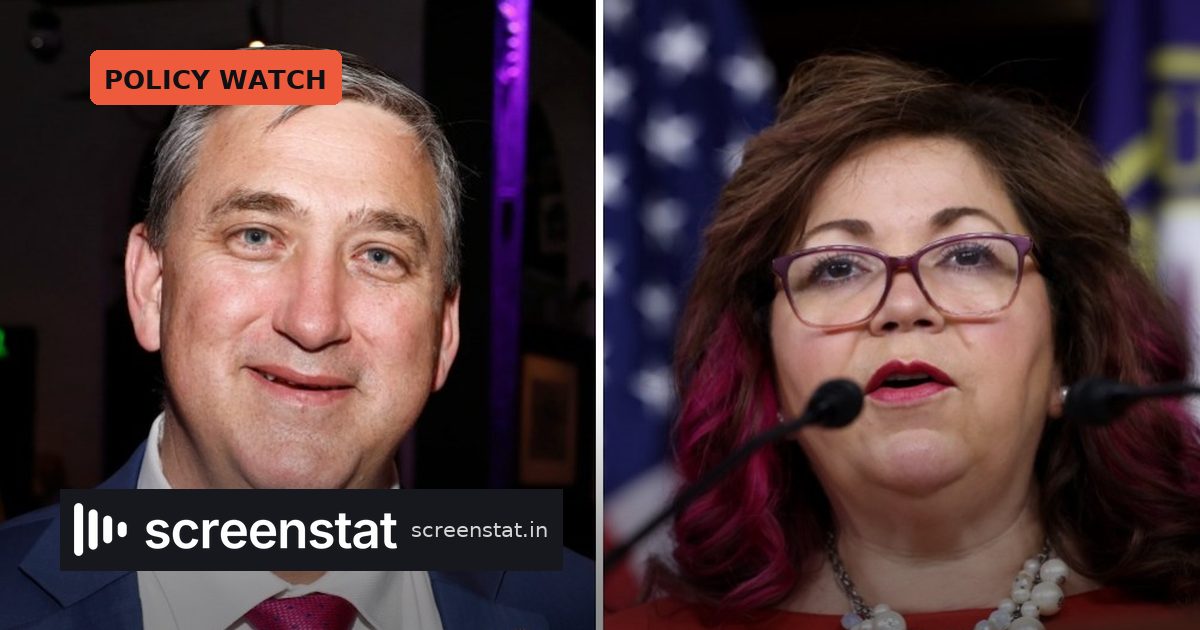
Rep. Nathaniel Moran, a Texas Republican, is working with Rep. Linda Sanchez, a California Democrat; both sit on the House Ways and Means Committee, which handles tax law. Rep. Laura Friedman of Burbank and Rep. Brian Jack of suburban Atlanta are driving a parallel bipartisan push.
The Motion Picture Association and entertainment unions have lobbied for roughly a year for a scheme that can compete with the UK, Canada, Australia and dozens of other jurisdictions. The unlock was political: President Trump backed the idea in an Aug. 31 Truth Social post, which is expected to bring Republican votes with it. Friedman told Variety the offers of help since then have been hard to count, and framed the pitch simply — everyone in every state, she said, benefits from the product being made domestically.
Why it matters beyond America
Production incentives are a zero-sum global auction. For two decades the US has been the buyer, not the seller — American studios shot in London, Toronto, Sydney, Budapest and increasingly Mumbai and Hyderabad because the rebate maths worked. A stacked 40-60% domestic package changes that maths materially.
For Indian services and VFX businesses, the immediate exposure is not features shooting on location but post, animation and reality formats. Animation is explicitly in scope, and the credit applies to labour costs — the exact line item that outsourcing was designed to compress. If a US studio can recover 20-30% of domestic animation payroll from the Treasury, the offshore delta narrows.
The catch: it is not law yet
The bill has not gone to the Joint Committee on Taxation for a cost score, and that number will run into the billions. Trump has argued the outlay would be repaid many times over; the MPA is expected to publish a supporting economic report shortly. Expect that fight — ripple-effect economics versus a hard fiscal score — to define the debate.
Timing is uncertain. Supporters hope to attach it to a tax package in the lame-duck session after the November election. Friedman said she would be delighted with that outcome but would not promise it. Next year looks likelier.
What to watch
Three markers will tell you whether this is real. First, the JCT score — anything north of a few billion a year invites resistance. Second, whether the California-pushed disaster-zone uplift (which would cover all of Los Angeles County after the 2025 fires) gets added back; it is absent from the current draft. Third, whether rival territories respond by sweetening their own offers. The UK and Canada will not sit still.
For anyone budgeting a 2027 slate, build two versions: one with a federal US credit, one without. The gap between them is the size of the bet.
Source: Variety