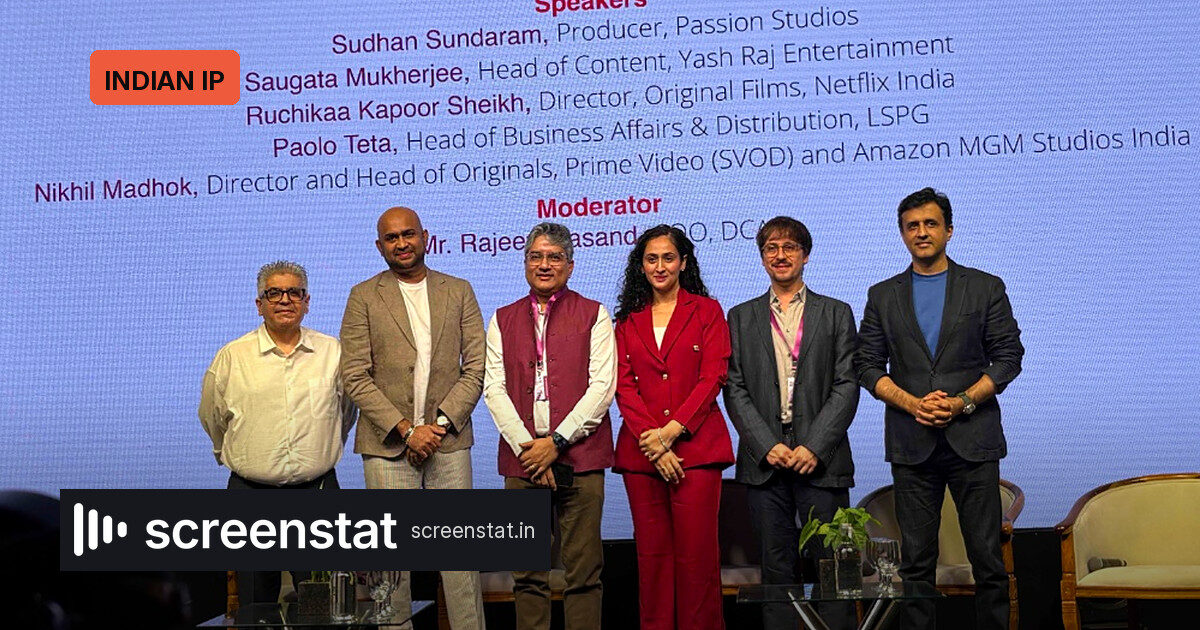
The 2024 Tamil thriller Maharaja has moved from a breakout theatrical run in China to a concrete inbound test for Indian intellectual property. Producer Sudhan Sundaram confirmed at WAVES Film Bazaar, held alongside the 57th International Film Festival of India in Goa, that a Hollywood agency has approached him for remake rights.
The number behind the approach
The Vijay Sethupathi starrer, produced by Sundaram’s Chennai-based Passion Studios, reportedly grossed INR 910 million (about $9.6 million, or ₹91 crore) at the Chinese box office. That overseas tally is now doing two jobs: it demonstrates audience demand beyond the home language, and it gives the rights holder a usable proof point when Hollywood comes knocking.
On the panel “From Local Hit to Global IP: Rooted in India, Reimagined for the World,” executives treated Maharaja as an early signal, not the finished story. Prime Video and Amazon MGM Studios India’s Nikhil Madhok said Indian content has not yet had a Korean-style run of consistent global breakthroughs: “The journey has begun, and we’re well on the path to doing that.”
Viewership is not the same as IP travel
Netflix India’s Ruchikaa Kapoor Sheikh framed the opportunity around universal themes — revenge, love, heartbreak, a mother’s love — that let rooted stories cross borders. Yash Raj Entertainment’s Saugata Mukherjee drew a sharper line: Indian films have travelled for decades, from Mother India to Dilwale Dulhania Le Jayenge, but travel is not adaptation. “Have the IPs traveled? Have we got a show which is being remade into 50 other languages? Not yet,” he said.
For buyers and rights holders, that is the useful distinction. A foreign box-office number is a discovery metric. A remake approach is an early indication that the underlying story has transferable commercial value — and that value only becomes real if the rights are structured properly.
What should producers do now
- Treat a remake approach as optionality, not revenue: no deal has closed.
- Lock adaptation and remake clauses early, at acquisition or commissioning.
- Build a mechanism to reward original writers if the IP is remade later.
- Do not franchise a title just because it works in another market; let the story justify the extension.
LSPG’s Paolo Teta put the legal case plainly: “Come to the lawyer early.” He said legal and commercial planning need not constrain creativity, and can protect a producer when unexpected interest arrives.
The panel also flagged animation as an underused lane, given India’s deep reserves of folk narratives and cultural traditions. That fits the same principle: build a distinct story first, then create the rights flexibility to exploit it.
The next milestone to watch is whether the Hollywood approach becomes a signed deal. Until then, the signal for India’s screen economy is clear: overseas box office is increasingly a shop window for the IP itself.