The numbers that shouldn’t have worked
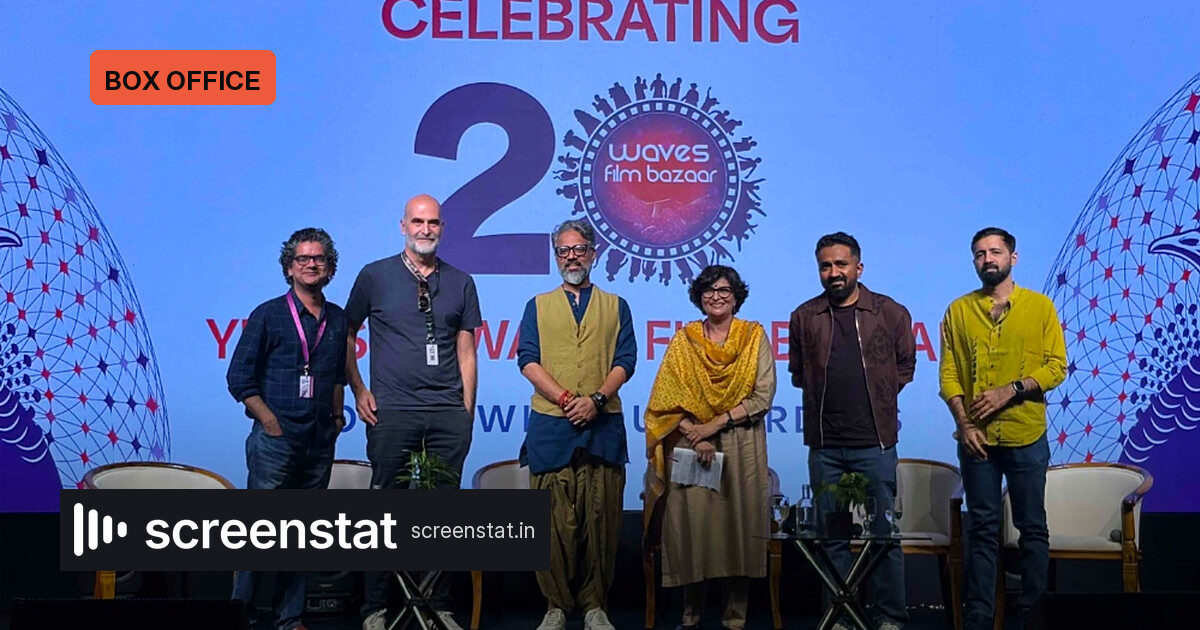
Vishal Chaturvedi’s spiritual drama Hanuman Ansh carried a reported budget of roughly ₹1.7 crore ($180,000). Within its first week, he says, it was already being called a flop. The film has now crossed ₹450 crore ($48 million), according to Chaturvedi, who was speaking at a Knowledge Series session at WAVES Film Bazaar during the 57th International Film Festival of India in Goa.
That is not a normal box-office curve. The picture, inspired by the life and teachings of Neem Karoli Baba, eventually found its audience through word of mouth, social media and an unusual city-by-city campaign in which Chaturvedi and his team visited cinemas and spoke directly to viewers.
Why the turnaround matters
The story flips the usual release assumption: a weak opening week, especially for a low-cost title, tends to end the run. Instead, Hanuman Ansh behaved like a community product. The filmmakers kept showing up after the first verdict, and viewers kept the film in circulation.
That makes it a useful case for media planners and entertainment marketers. Paid reach can buy the first audience, but the second and third waves came from recommendation, reels and local conversations.
- The first-week label was not the ceiling: the film was written off early and still scaled.
- The marketing asset was presence, not polish: the team travelled to cinemas instead of relying only on a traditional launch.
- Audience production extended the campaign: viewers cut reels and took the film’s reach beyond the maker’s control.
The audience completes the film
Academic Archana R. Singh made the same point on the panel. A film is a negotiation between two storytellers, she said: the filmmaker and the hundreds of storytellers in the audience who “actually complete it.” Audiences have shifted from passive viewers to “prosumers” who consume and produce, cutting reels from content they like and popularising it on social media.
Chaturvedi pushed intent and emotional connection over surface craft. Generative AI can handle the obvious, he argued: “AI can do that 2 + 2 = 4. It can’t do that 2 + 2 = 5, 6, 7.” The extra meaning, he suggested, comes when audiences relate to a story’s intent and emotions.
The business and the magic
Malayalam filmmaker Christo Tomy said the first challenge after film school is not craft but funding, getting the film made and getting stars to work with you; producers were reluctant to back his sombre, female-led drama Ullozhukku. Portuguese director Tiago Guedes said commercial success cannot be predicted or engineered.
What to do with it
For marketers, the lesson is not that every low-budget title will do this. It is that early negative labels can be treated as a data point, not a final forecast. The film’s second life came from direct audience contact and shareable moments, not from buying more of the same media.
Distributors should ask where a title’s most engaged pockets are before pulling shows, and whether the campaign is giving those pockets something easy to pass on. A micro-budget film cannot out-spend a blockbuster, but it can out-listen one.