The exhibition business is no longer just about selling tickets. After a near-collapse during COVID-19, screens are being bought by filmmakers, studios and streamers as trophy assets, awards infrastructure and community projects. The new owners are discovering that the passion for theatres is easier to finance than the margin.
From bankruptcy to a buying wave
Tim League, co-founder and former CEO of Alamo Drafthouse, describes the pandemic bluntly: “COVID allowed people to acknowledge their inner recluse.” Arclight disappeared, Alamo went through bankruptcy, and many locations only survived on private rentals or side revenue.
What followed is a different kind of revival. Kevin Smith put $450,000 into his New Jersey hometown theatre and rebranded it Smodcastle Cinemas. A Jason Reitman-led group of 30 filmmakers paid $12 million for the Village Theater in Westwood and will spend another $25 million on renovations before a 2027 reopening. Kristen Stewart bought Los Angeles’ Highland Theatre in February 2026, and Martin Scorsese, Ethan Hawke and Frances McDormand joined the advisory board of a planned five-screen arthouse at the former Metro Theater in New York City.
Smith doesn’t dress it up: “Owning a movie theater in the 21st-century post-COVID world, it’s a dicey proposition at best.” He says the theatre has never been profitable and operates as a nonprofit. That structure is spreading from Vidiots in Los Angeles to the Tasveer Film Center in Seattle, which reopened a former multiplex in 2025.
Studios and streamers want their own screens
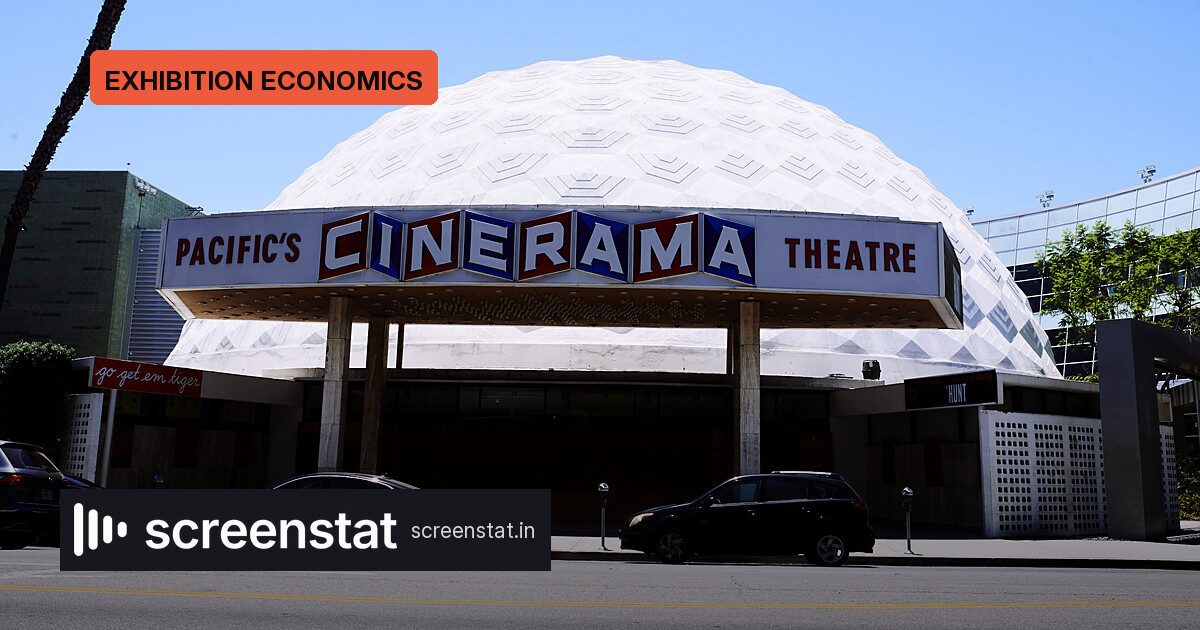
Netflix leases the Paris Theater and owns the Egyptian in Hollywood. Amazon runs The Culver Theater, and Paramount took over the Bay Theater in November 2026. Sony bought Alamo Drafthouse in 2024, and in July 2026 Alamo announced it would acquire the Cinerama Dome and its attached 14-screen multiplex.
James Huntsman, co-founder of Blue Fox Entertainment Group, explains the logic: even a streamer struggles to get award-qualifying screens in Los Angeles and New York during the crowded fourth quarter. Owning or leasing a screen solves a calendar problem, not just a brand problem.
The economics haven’t softened
- Ticket splits: about 30% for repertory to over 60% for a Disney blockbuster, with some studios non-negotiable.
- Advertising: Laemmle says in-theatre ad revenue sits around 25% of pre-pandemic levels as budgets moved elsewhere.
- Clean policies: distributors can require a licensed film to play whenever the theatre is open, squeezing single-screen and rural venues.
- Trailer programmes: pay-for-play placements are pushing pre-show blocks toward 30 minutes.
What the numbers tell media planners
A national blockbuster does not mean a healthy local screen. Smith says his theatre sold 12 tickets on the opening weekend of a film that went on to gross over $2 billion. Theatres are therefore layering Q&As, festivals, repertory marathons, restaurants and private events onto the box office.
For brands and planners, owned cinemas are becoming premium community and event inventory. The brief should not be “national opening-weekend reach”; it should be a small, curated, high-attention audience — with costs and splits that still make it a thin-margin business.