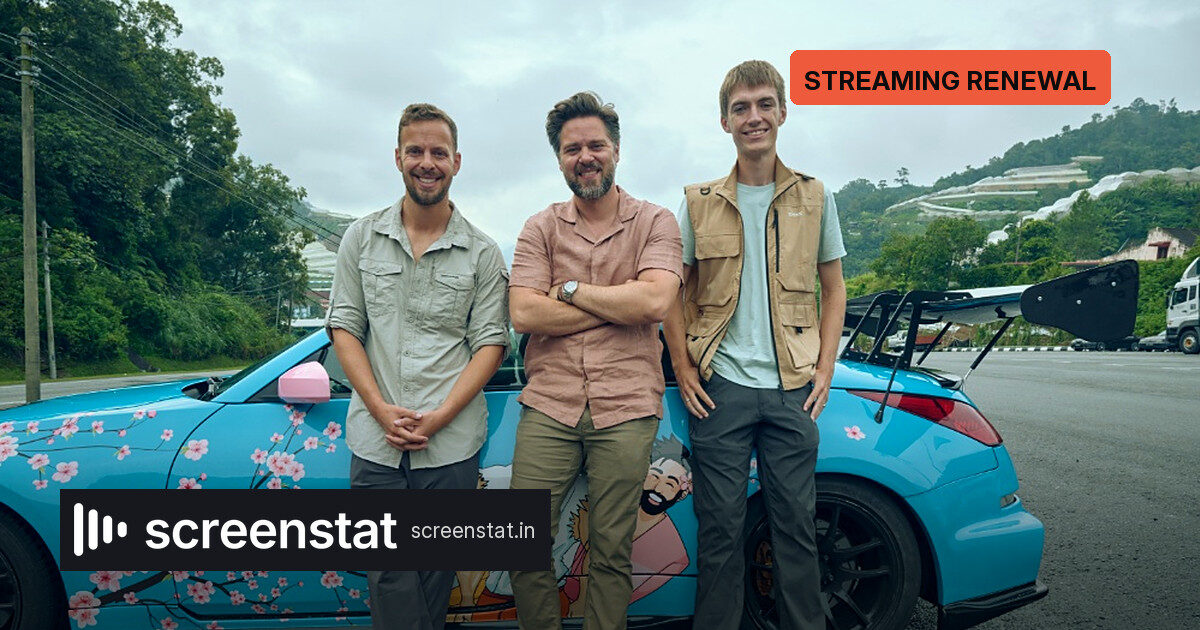
Prime Video has ordered a second season of The Grand Tour, keeping hosts Francis Bourgeois, James Engelsman and Thomas Holland for another six episodes.
The streamer says the new run will include fresh stories, far-flung locations and what it calls “a healthy side of competition.” Production starts next year, with Prime Video promising more performance, old bangers, globe-trotting and laughs.
Why this renewal matters more than most
The trio took over earlier this year from Jeremy Clarkson, Richard Hammond and James May, who launched the show for Prime Video and fronted it for six seasons. Before the Amazon move, Clarkson, Hammond and May were the faces of the BBC’s Top Gear.
That history made the handover unusually risky. Motoring formats often carry more audience loyalty in the presenters than in the title. A second-season order is the strongest public signal yet that Prime Video believes the new lineup can hold the audience.
A deliberately compact order
Six episodes is a measured bet, not an all-in commitment. It gives Prime Video another cycle to judge chemistry, retention and production economics before considering a bigger run.
The show is produced by Studio Lambert, the company behind The Traitors.
- Renewal: Season 2, six episodes, production next year.
- New hosts: Francis Bourgeois, James Engelsman and Thomas Holland.
- Previous era: Clarkson, Hammond and May fronted six seasons.
- Producer: Studio Lambert.
The hosts are reading the room
In a statement, the new trio said that even with the blessing of Jeremy, James and Richard, taking on the job was “probably more stupid than brave.” They added that the first series was received more positively than they had imagined.
That framing is smart. In a franchise takeover, acknowledging scepticism can turn audience doubt into part of the show’s appeal. It positions the new hosts as fans who understand the legacy, not replacements claiming superiority.
What to watch next
Studio Lambert executive producer Nia Yemoh said the relaunch had been “enormous fun” and that the team wants to see how the three hosts’ chemistry grows across unexpected locations, stories and the competition format viewers expect.
For media planners, the show now shifts from a relaunch experiment to repeatable unscripted inventory. The key metric is not the renewal itself; it is whether Season 2 holds or builds the first run’s audience when the novelty is gone. If retention holds, the programme offers a repeatable playbook for talent transitions in personality-led formats.
If it does not, six episodes gives Prime Video a contained way to adjust without a long-term writedown. The show becomes a case study in how to handle talent succession on a global franchise.