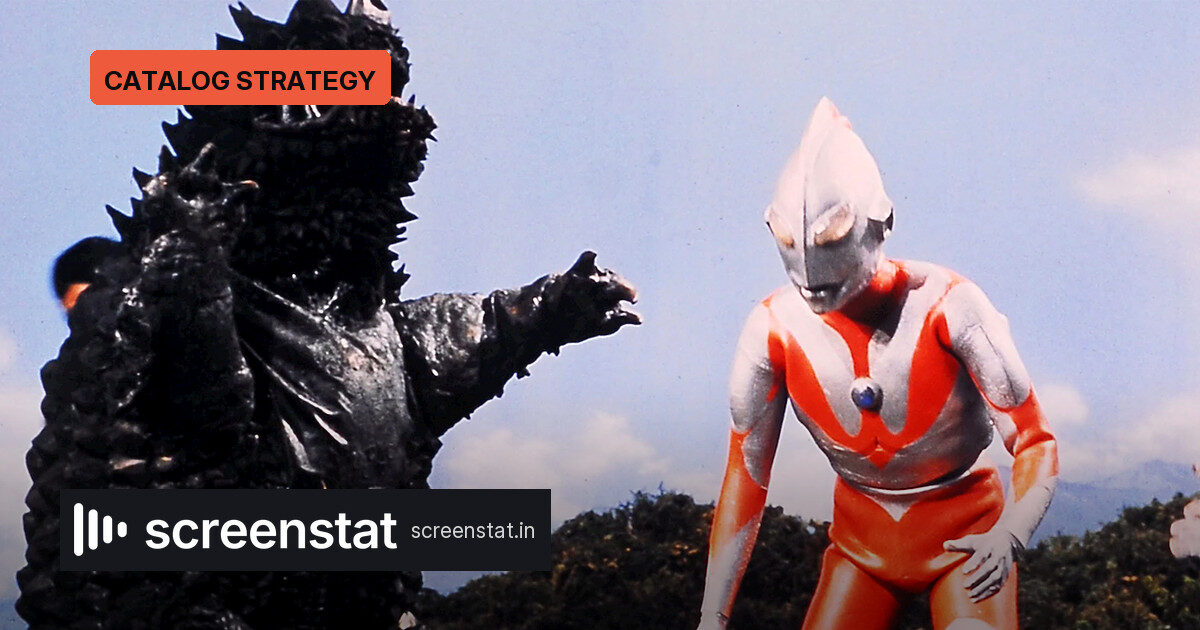
Netflix is going back to the Showa-era Ultraman vault. Two compilation films built from the original 1966-67 television series will stream globally, including in the United States, from December 2, 2026.
The timing lines up with a milestone: 2026 marks 60 years since the character first appeared on Japanese television. Until now, US subscribers could find modern Ultraman anime and animated film on the service, but the original Showa-era incarnation was absent.
What Netflix is adding
Both titles are theatrical compilations, edited from episodes rather than new productions.
- Ultraman the Movie (1967) — Directed by Hajime Tsuburaya and assembled from four episodes, it moves from the hero’s origin to a showdown with Gomora. It originally played in Japanese cinemas in July 1967 on a double bill with Toho’s King Kong Escapes. Rated TV-PG.
- Ultraman: An Akio Jissoji Film (1979) — A recompilation of five episodes directed by Akio Jissoji, the title includes newly shot scenes alongside the original material.
The films feature the original Science Patrol lineup, including Susumu Kurobe as Hayata.
A catalogue play, not an original bet
Netflix has been quietly building a kaiju and tokusatsu shelf. In July it added the Rebirth of Mothra trilogy and Godzilla, Mothra and King Ghidorah: Giant Monsters All-Out Attack. It had already licensed Godzilla Minus One and its black-and-white edition. The Ultraman relationship runs deeper: Netflix was the exclusive home of the CG anime series, which wrapped after three seasons in 2023, and it released the animated feature Ultraman: Rising in 2024.
These classic films are cheaper than originals and targeted at a committed fandom. Their job is less about signing up a new household and more about giving genre fans a reason to keep scrolling inside the platform.
For media planners, the audience signal is precise: fans of kaiju, tokusatsu and classic Japanese television are not mass-market but are habitual, engaged and easy to reach through genre pockets. A small catalogue addition can support affinity campaigns, social creative and PR without the cost of a new original.
What streaming teams should watch
The deal is a clean example of anniversary-driven licensing. A franchise birthday gives the launch a hook; the title itself supplies depth rather than a big production risk. For content buyers, the tactic is simple: time legacy acquisitions to a milestone, package older titles alongside newer franchise entries, and treat the drop as a retention play for a niche interest graph rather than a broad acquisition campaign.
Expect more vault titles from Japanese genre cinema if this shelf continues to perform. The strategic question for platforms is how much catalogue depth they need before it becomes noise.