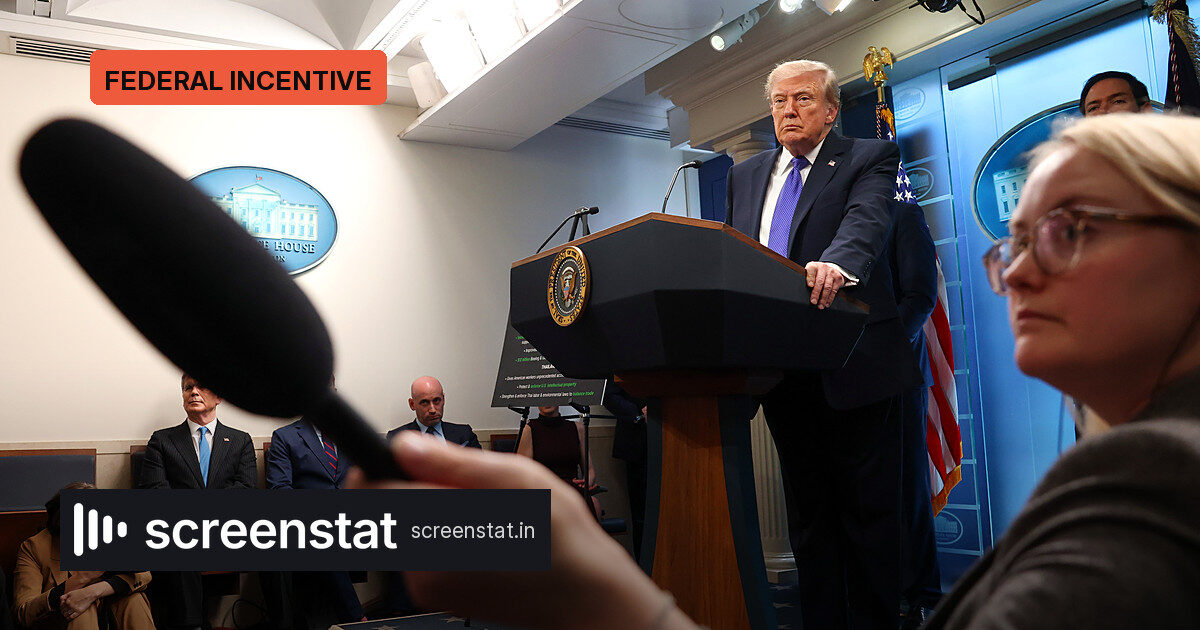
The push to keep U.S. film and TV crews working at home picked up a powerful ally on Friday, when President Trump told reporters the federal production tax credit is “running its way through Congress” and predicted it would pass.
The bill, the Motion Picture, Television, and Entertainment Revitalization Act, was introduced in September by Senator Adam Schiff of California and Senator Tim Scott of South Carolina. This week it added 60 House cosponsors and four Senate cosponsors, with members from both parties signing on.
Trump first called for a federal production incentive in August after a meeting with actor Jon Voight, one of three industry special ambassadors he appointed.
What the credit actually does
Qualifying productions would receive a 20 percent credit on labor expenses for American workers. Productions that hit bonus criteria could see the credit reach 30 percent.
Trump named Georgia and New Jersey as states with strong existing incentives but argued that state programs alone would not pull enough work back from overseas. “With a federal credit, Hollywood would open again,” he said.
For the screen business, the mechanism is straightforward: a labor credit lowers the marginal cost of hiring U.S. crews. That directly attacks the cost advantage Canada and the U.K. have used to become default destinations for projects that could otherwise shoot in the U.S.
What changed this week
- 60 new House cosponsors and 4 new Senate cosponsors were announced Thursday, including Republicans and Democrats.
- The credit is 20% on American labor costs, rising to 30% for bonus-qualifying productions.
- No floor vote is set, but people tracking the bill say attaching it to a stopgap government funding measure could accelerate it.
- New endorsements from the AFL-CIO and the American Hotel & Lodging Association joined IATSE, SAG-AFTRA, the Directors Guild of America and the Motion Picture Association.
Why this matters for budgets and planning
Entertainment marketers and production executives should treat this as a planning variable, not a completed line item. Representative Linda Sánchez called for passage before 2027 so productions could qualify on January 1. That creates a real scenario: a greenlit project waiting a few weeks could see its effective U.S. labor bill drop by a fifth.
The smarter near-term move is to run two production scenarios. One keeps the shoot in the U.S. and stacks the proposed federal credit against existing state programs. The other assumes a foreign location with whatever incentives and logistics costs apply. The 20-to-30 percent range gives you a clear way to model where the breakeven shifts before committing.
The theater piece remains unsettled. Trump said the administration is negotiating whether to extend the measure to benefit movie theaters, but no final position was announced.
The next signal to watch
Schiff said the coalition can get the bill “across the finish line.” The practical test is whether the measure is included in a must-pass funding bill. If it is, the credit could move from talking point to tax code quickly. If it is not, the year-end target becomes harder.
Until it is signed, keep production budgets flexible, watch the bonus criteria, and avoid booking foreign stages on the assumption that Washington will not act.