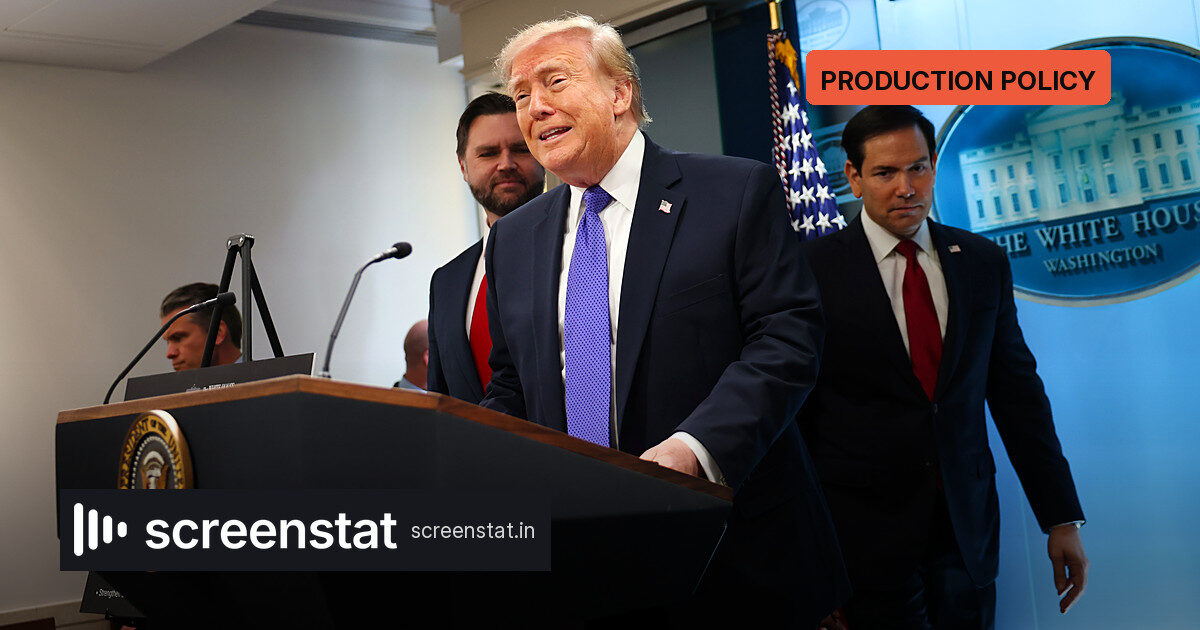
Donald Trump used a Friday press conference to give Hollywood a specific number to watch: a proposed 20% federal production incentive. He said the Motion Picture, Television, and Entertainment Revitalization Act is “running its way through Congress” and has “unbelievable support.”
He went further. “I can tell you right now, it’s going to happen,” Trump said.
Bipartisan math, with a twist
The bill was introduced in the Senate and House in September by members from both parties. Sen. Adam Schiff, a Democrat from California and one of Trump’s more public political adversaries, is a sponsor, alongside Republican Sen. Tim Scott. Trump pointed to that pairing as evidence the incentive could move in a divided Congress.
He added that the plan may be broadened to include live theatrical productions.
What a federal layer changes
Trump framed the issue as one of competing incentive packages. “We don’t make movies in this country anymore,” he said, pointing to production that has moved to Canada, the United Kingdom and Australia. State-level programs in Georgia and New Jersey help, he argued, but without a federal backstop the United States keeps losing projects.
For buyers, producers and studio finance teams, the implications are direct. A federal 20% production incentive would sit on top of state credits, changing the net cost calculation for film and TV budgets. It would also compete with the packages that have made Canada, the UK and Australia regular destinations for major shoots.
Trump added that the industry is not the country’s largest “but it’s a very important industry,” and said “Hollywood would open again.”
The vote is the real story
Industry representatives from unions and trade groups have spent the past week lobbying on Capitol Hill. The hope is to attach the bill to a year-end funding or tax package and pass it during the lame-duck session. That outcome is not assured.
- Watch whether the bill gets attached to a must-pass funding vehicle.
- Track whether live theatrical production is included in the final language.
- Check how the federal layer would stack with state incentives in your location models.
Until the bill is signed, the operative number remains 20% proposed, not guaranteed.
Read it as a two-case problem
Media planners and production finance teams should treat this as two possible worlds. In one, the federal layer becomes law and clears new shoot locations. In the other, existing state credits remain the only US lever. Keep both versions in the model, and do not lock a location or spend based on a promise from a press conference.