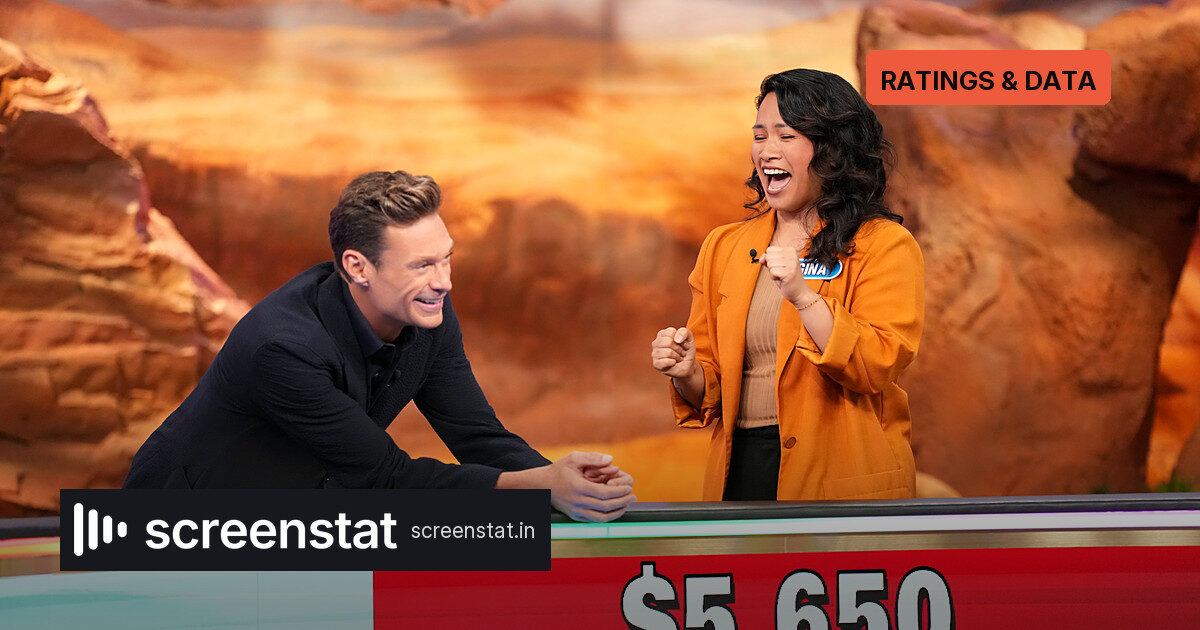
Wheel of Fortune is doing something increasingly rare in linear television: growing. In its 44th season, the syndicated game show is averaging 8.59 million viewers, up 17% from last year, while its household rating has climbed to a 4.8, a 16% improvement.
Streaming is adding a second growth curve. Sony Pictures Television says total streaming viewers are up 78%, and adults 25-54 are up 29% across Peacock, Hulu and Hulu on Disney+. The studio puts total reach at nearly 37 million viewers so far this season and calls Wheel the No. 1 entertainment program on TV.
What changed on air
The season’s most visible format change is Fortune Frenzy, a new opening round in which contestants get 30 seconds to solve as many puzzles as possible. The effect is more gameplay before the first break, a small structural shift that can help hold early tune-in.
Why the distribution reset matters
This is also the first fall season in which Sony handles marketing, promotions and affiliate relations for the show. A year ago, CBS Media Ventures and Sony Pictures Television settled their long-running distribution dispute over Wheel and Jeopardy. Sony took over international distribution last year, while CBS retained domestic distribution through 2027-2028; Sony then takes that over too.
Suzanne Prete, Sony Pictures TV president of game shows, said the team has been “very deliberate about using audience insights” to evolve the format while protecting the franchise. The numbers, she argued, validate that approach at a time when the broader linear landscape is challenged.
What this means for media planners
For buyers, Wheel of Fortune is now a clean case of a legacy syndication brand working as a two-screen reach vehicle. The linear rating still supplies broad, predictable audience; the streaming growth brings a younger tilt, with adults 25-54 up 29%.
- Linear: 8.59 million average viewers, up 17%; household rating 4.8, up 16%.
- Streaming: total viewers up 78%; adults 25-54 up 29%.
- Reach: nearly 37 million total viewers so far this season; No. 1 entertainment program on TV, per Sony.
The show is available the day after broadcast on Peacock, Hulu, Hulu on Disney+ and Canada’s Crave, which gives the syndicated run a digital tail that many older formats lack. The split in growth rates is useful: linear still owns scale and frequency, while streaming is doing the incremental demo work. If a brand needs fast reach, the broadcast average remains the base. If it needs a younger skew, the next-day streaming window is where the marginal audience is coming from.
The practical takeaway is to stop treating such titles as either linear or streaming inventory. The growth suggests both can be planned together, with different roles by platform and demo.
Source: Variety