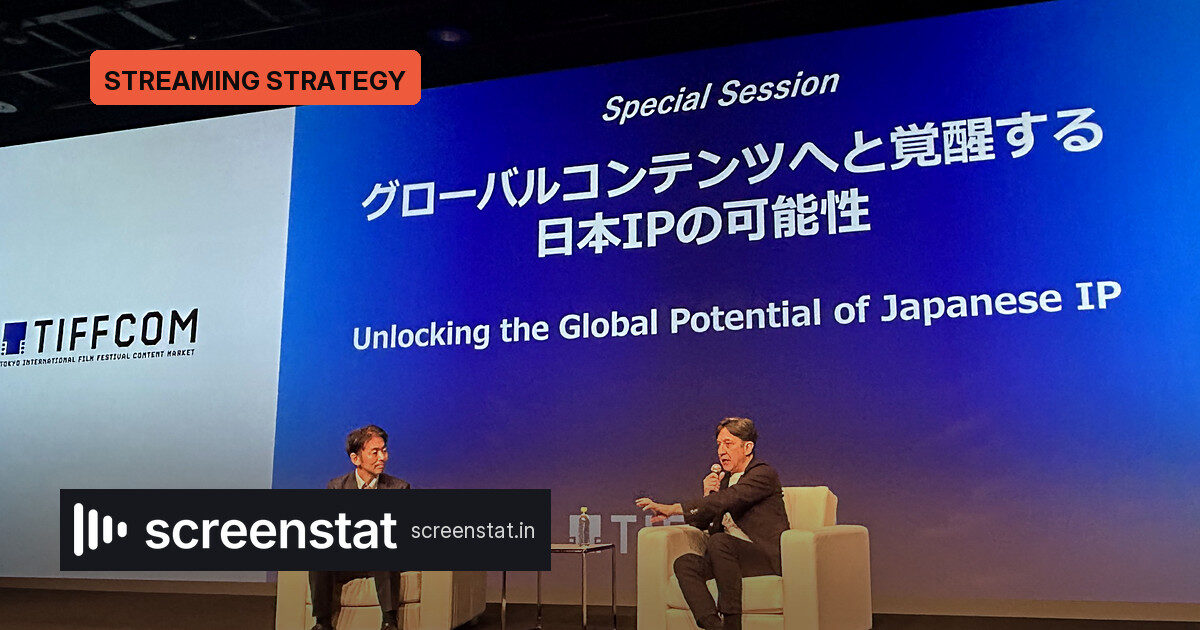
Tokyo: Amazon MGM Studios is doubling its investment in original Japanese content, the company’s new Japan head Buddy Marini told TIFFCOM’s opening day. He did not disclose a figure, but the direction is unambiguous: fewer licensing plays, more locally produced drama, anime and theatrical films designed to travel.
A bigger slate, built with local partners
Marini said the studio is working with Toho, TV Tokyo, Wowow, Credeus and Korea’s Studio Dragon to expand Japanese live-action and anime output. The slate is made primarily for Japanese viewers, he said, but the ambition is global. “We’re seeking to appeal to a wide audience so we’re producing content across diversified genres,” he said.
- The Apothecary Diaries — live-action light novel adaptation starring Mana Ashida as Maomao, co-produced with Toho, streaming worldwide on Prime Video in 2028.
- Chloe and Emma — manga adaptation with Wowow, on Prime Video since June 2026.
- Criminal (Hanzaisha) — directed by Daishi Matsunaga for TV Tokyo, released in March.
- Like a Dragon: Yakuza — Sega video game adaptation produced with The Fool, Wild Sheep Content and 1212 Entertainment.
Older titles such as Marry My Husband and The Silent Service already show the template: Japanese IP, local production partners, global streaming release.
Why the dollars are moving now
Marini framed the shift as a move from aggregation to ownership. “Amazon Prime has been acting as an aggregator for content, and we grew that business very successfully, but going forward we wanted to focus more on original content,” he said.
The studio’s long-term plan is to develop scripts with global appeal from the start, and to stay flexible about theatrical or streaming release. In practice, that means creative executives and writers inside the team are expected to shape projects before they get to production.
Japan’s producers want more than a fee
Credeus CEO Shinzo Matsuhashi said the Blue Lock feature set up CK Works, a rights-holding joint venture with publisher Kodansha, so the production company could retain a stake in the IP. The reason is structural: production budgets are high, and production companies have traditionally been contractors who “create, deliver and are left with nothing at the end.”
“It’s rare for production companies to be involved in holding IP rights, but it’s starting to become more standardized and practiced globally.”
That matters beyond Japan. If producers retain rights, the economics of a global hit accrue to the originator, not only the platform.
The One Piece budget lesson
Netflix’s One Piece showrunner Steven Maeda described the balancing act behind a giant manga adaptation. He wrote three versions of the show after budget discussions: one expensive, one much cheaper. The cheaper version, he said, would not have been the show fans loved. “If you succeed, you can have international success. And if you fail, everyone hates you,” he said.
For programmers and marketers, the takeaway is practical: global IP adaptation is a fan-retention decision before it is a cost decision. Japan’s current original-content push will test how well the two can be aligned.
Source: Deadline