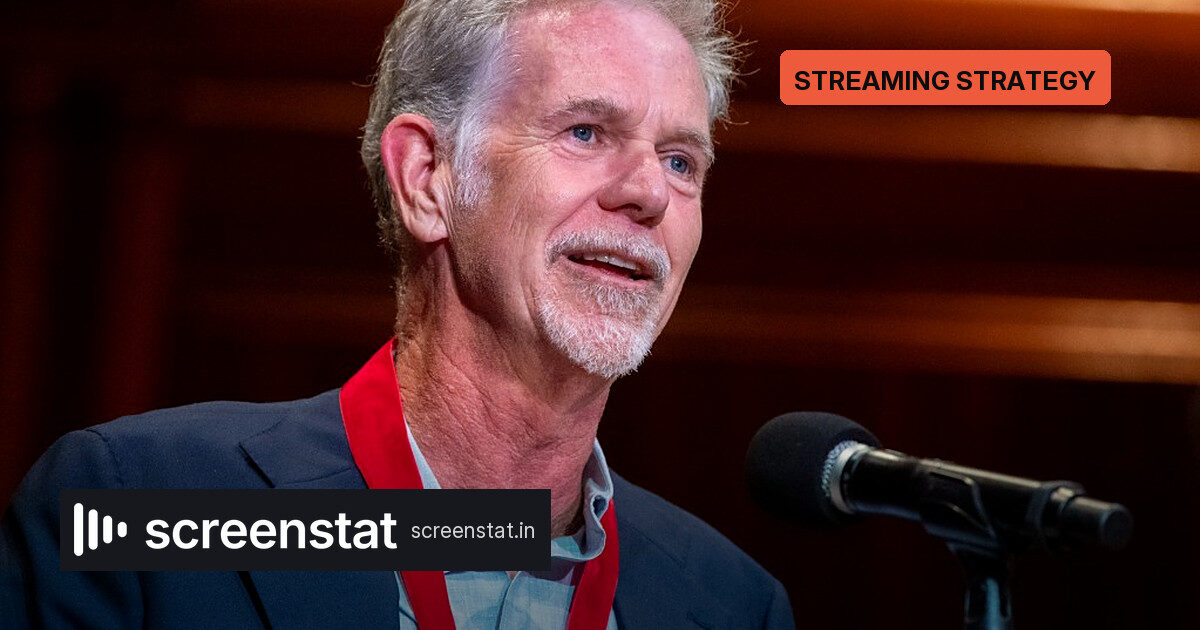
Netflix co-founder Reed Hastings has ended his three-decade run at the company, but he is not staying quiet about its current reset. In an interview with Kara Swisher’s On podcast, he said he learned about the company’s October layoffs from reports, not from an internal briefing.
1,000 jobs go, and leadership changes
Netflix is cutting about 1,000 roles, roughly 6% of staff, while simultaneously rebuilding its content leadership: Bela Bajaria is out as content chief and Peter Rice takes over; film head Dan Lin has also been ousted. Hastings described the layoffs as “traumatic moments” and admitted he would rather be “in the fray helping,” but added that the remaining leaders are competent and will sort it out.
When asked whether new leadership should rethink programming after slower viewership growth, Hastings kept it simple: make more and better films and television. His brand test is stricter than volume.
“We could be distrusted, we could be disliked, but we can never be boring.”
That, he argued, is the essence of an entertainment brand: being thrilling. Live sports can be part of the mix, but the core must stay exciting.
YouTube is winning attention, not necessarily story
On YouTube, Hastings sees a “highly tuned machine for attention” that is taking TV viewing hours. He put the creator economy in context: about 3 million paid creators compete for attention, and viral hits such as Obsession and Backrooms still account for a very small slice of YouTube viewing. His read is that YouTube is built to hack attention, and it is winning hours, but that does not mean Netflix should chase the same format.
He reached for a historical parallel: in the 1950s and 1960s, television pulled audiences away from movies, but 1970s cinema answered with a creative surge in pacing and realism. Netflix, in his telling, should play the role of movies in that story: raise the creative bar, become more gripping and real, not copy the new platform.
The WBD deal that wasn’t
Hastings also revisited Netflix’s abandoned pursuit of Warner Bros. Discovery’s studios-and-streaming unit. Paramount eventually paid Netflix a $2.8 billion breakup fee on the way to its $110 billion deal to buy all of WBD and form Skydance. Hastings said Netflix was comfortable with its original bid, but the price rose too far. “We could have done it. It’s not a ‘can’t,’ but a ‘choose not to.’”
What this means for the screen business
- Netflix is signaling premium long-form, not short-form mimicry, even as YouTube grows on TV sets.
- The 3 million creator number matters less than viewing share: volume of creators does not equal volume of hours.
- Discipline has a price: a $2.8 billion breakup fee can be cheaper than closing a stretched acquisition.
For media planners and entertainment marketers, the interview clarifies the next phase: competing for scarce attention with better storytelling, while YouTube wins on creator-driven volume. The strategic bet is not to be everywhere, but to be unmissable.
Source: Deadline