Netflix’s decade-old bet on Korean entertainment now has a hard number attached: more than 12 billion viewing hours in a single 12-month window. The figure, released as the streamer marked 10 years in Korea, makes Korean programming second only to U.S. content by country of origin.
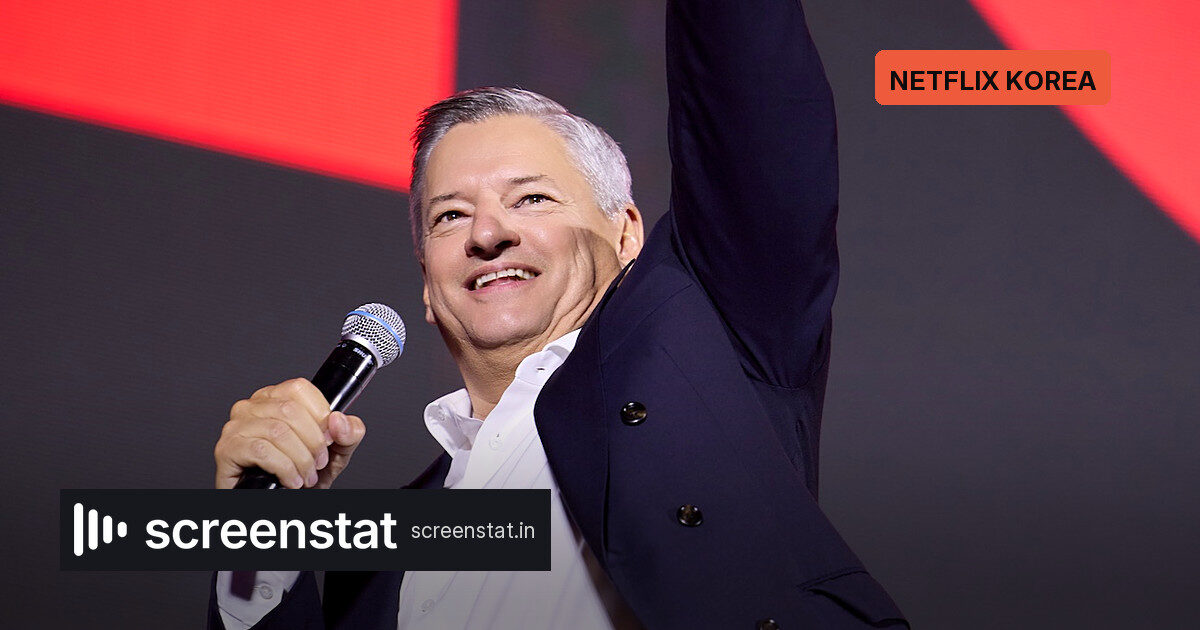
The reveal came during a two-day fan event at Seoul’s Sangam Oil Tank Culture Park, where co-CEO Ted Sarandos took the stage days after a corporate reset that replaced chief content officer Bela Bajaria with Peter Rice and cut roughly 1,000 roles.
The data behind the anniversary
Netflix turned the milestone into a metrics moment. The company shared that Korean programming is its most-watched non-English-language category, and more than 80% of members worldwide have watched at least one Korean title.
- More than 200 Korean titles have appeared in Netflix’s global Top 10 since June 2021.
- The three seasons of Squid Game hold the top three spots on the all-time most-watched non-English TV list.
- This year’s Teach You a Lesson entered the same ranking at No. 10.
- Korean titles logged more than 12 billion viewing hours between April 2025 and March 2026.
Sarandos framed the relationship in long-term terms: “Ten years ago, we dreamed big, but none of us could have imagined that Korean stories would move hearts around the world, and land right at the center of global culture.”
A slate preview, not just a party
The event did double duty as an upfront for Korean titles. Possible Love, Lee Chang-dong’s Silver Lion Grand Jury Prize winner, will stream globally on Netflix on Nov. 6. Tantara, a period drama set in the Korean entertainment industry, arrives Dec. 11. Sarandos also previewed Grand Galaxy Hotel, She, Wolf, All of Us Are Dead Season 2 and the live-action take on Solo Leveling, none of which has a confirmed date yet.
Beyond the fanfare, the message for media planners and entertainment marketers is that Korean content is no longer a regional buy. It consistently tops non-English engagement, feeds global Top 10 charts and gives Netflix a slate it can sell as event programming.
The Seoul event drew more than 10,000 attendees and another 3.58 million cumulative online views. That reach, paired with the viewing-hour total, suggests Netflix’s reliance on Korean storytelling is only deepening, even as the company reshapes its content leadership.
For advertising-supported tiers and brand sponsors, the implication is to treat high-visibility Korean titles as global inventory rather than niche segments. For the broader industry, the 10-year arc shows how a local market investment can become a platform’s centre of gravity.
Source: The Hollywood Reporter